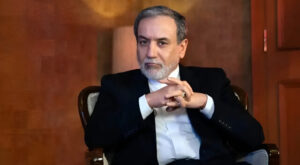
Mohammad Eslami, head of the Atomic Energy Organization of Iran (AEOI), said on Monday that despite global concerns over Iran’s progress in advanced nuclear technologies, “we decided to continue this path with trust in God,” stressing that Iran’s growing need for clean and sustainable energy has made nuclear development an unquestionable necessity.
Eslami said the current world order is plagued by “the law of the jungle and double standards,” but noted that the IAEA remains an institution under the United Nations, making it essential for Iran “to prevent accusations of deviation from regulations by adhering to the frameworks.”
Pointing to reports by the Institute for Science and International Security (ISIS) and David Albright on projects such as the Darkhovin nuclear plant, Eslami said those assessments show “the world is worried that Iran is taking steps toward developing advanced nuclear technologies,” but reiterated that Tehran will press ahead regardless, given the country’s irrefutable need for nuclear-generated power.
Eslami highlighted significant progress in the construction of the second and third units of the Bushehr nuclear power plant, noting that until 2022, the project had not advanced sufficiently despite four-and-a-half years having passed since Iran’s contract with Russia.
He said more than 6,000 people are now working on the plant’s new units. The first unit alone has delivered “72 billion kilowatt hours of electricity” to the national grid and has a minimum operational lifespan of 50 years, he added.
The nuclear chief recalled that before the 1979 Islamic Revolution, a plan to produce 23,000 megawatts of nuclear electricity had been approved but never implemented.
Underscoring the central role of uranium enrichment, Eslami said that without it, Iran cannot produce nuclear fuel or radio-medicine.
He pointed to Israeli strikes during the 12-day war, saying the regime targeted “the fuel factory for the production of radiopharmaceuticals” as well as the Oxygen-18 production line used in PET scan devices.
He said Iran’s nuclear development aims to improve people’s lives, adding that the country’s radiopharmaceutical company has become one of the world’s leading producers, while Iran’s high-purity heavy-water products are in demand from many countries.