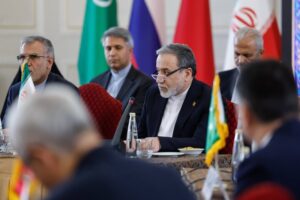
Avash News: According to the Russian Foreign Ministry, the talks focused on advancing bilateral relations following the entry into force of the Iran–Russia Comprehensive Strategic Partnership Treaty earlier this year. The two sides reviewed the implementation of agreements reached at the highest political level, including recent meetings between the presidents of Iran and Russia, and discussed preparations for the upcoming session of the Joint Economic Commission scheduled for February 2026 in Iran.
Araghchi and Lavrov signed a cooperation program outlining consultations between the two foreign ministries for 2026–2028, which both sides described as a roadmap for comprehensive cooperation. Araghchi said bilateral relations have expanded significantly, particularly in economic sectors such as energy, transport, and transit, highlighting progress on the North–South Corridor project and growing bilateral trade.
Regional and international issues featured prominently in the talks. Both ministers exchanged views on developments in West Asia, the South Caucasus, the Caspian region, and Afghanistan, as well as the situation surrounding Iran’s nuclear program. Araghchi reiterated Iran’s commitment to its obligations under the Non-Proliferation Treaty while stressing Tehran’s inalienable right to the peaceful use of nuclear energy, including enrichment. He said recent US and Israeli attacks had failed to undermine Iran’s indigenous nuclear capabilities or national resolve.
Lavrov reaffirmed Russia’s support for Iran’s right to peaceful nuclear activities and criticized the International Atomic Energy Agency for failing to take a clear stance on attacks targeting Iranian nuclear facilities. He said Moscow remains ready to assist in finding diplomatic solutions to what he described as a crisis created by Western policies, emphasizing that any progress must be based on mutual respect and Iran’s goodwill.
Both sides highlighted shared opposition to unilateralism and sanctions, stressing the importance of multilateralism and international law. Araghchi said Iran and Russia are aligned in resisting external pressure and coercive policies, adding that cooperation within frameworks such as BRICS, the Shanghai Cooperation Organization, and the Eurasian Economic Union will continue to expand.
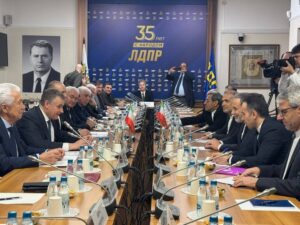
During his visit, Araghchi also met with Russian lawmakers, academics, and students, describing parliamentary and intellectual exchanges as important pillars of bilateral relations. He said the Iran–Russia strategic partnership not only serves the interests of both nations but also contributes to regional and international peace and security.
Lavrov, for his part, said enemies of both countries were seeking to undermine their relations but stressed that Moscow and Tehran are determined to further strengthen cooperation across political, economic, and security domains.
Araghchi arrived in Moscow on Tuesday as part of a series of regional and international consultations, following a visit to Belarus, to hold talks with senior Russian political and parliamentary officials.
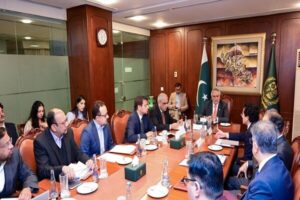
Pakistan reaffirms commitment to expanding ties with Iran
According to a statement released Wednesday by Pakistan’s Foreign Ministry spokesperson’s office, a number of senior Pakistani officials held a special meeting on relations with