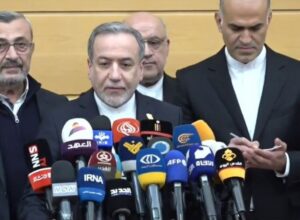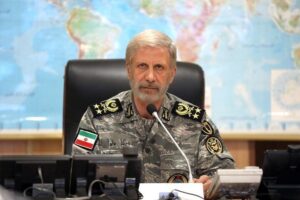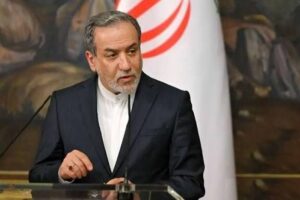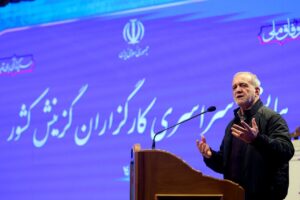
Avash News: Addressing the International Conference on “Martyr General Qassem Suleimani; Diplomacy and Resistance,” Iran’s Foreign Minister Abbas Araghchi said that he is not talking about G. Suleimani himself but about his legacy in foreign policy. “Martyr Suleimani was the architect of resistance in the region, but the impact of such an architect has gone beyond its policies, and I think that his thought, which is a manifestation of the causes of the Islamic Revolution, is grounded on a theoretical foundation, and the foreign policy of the Islamic Republic of Iran must be named resistance-based diplomacy.”
Araghchi emphasized that the diplomacy of the Islamic Republic is a resistance-based diplomacy that has been shaped by resistance and is moving on that basis. He said that successful diplomacy is a combination of bravery and consultation with others; without using the techniques of diplomacy, neither communication will have order nor will efforts be fruitful.
Araghchi said that the rule of the jungle has once again governed the international system. “The nature of resisting domination and justice-seeking of the Islamic Republic has stood against the dominant powers and has kept the voice of justice-seeking alive.”
The official said that the secret to survival on this challenging path is “resistance and resilience.” “In the absence of steadfastness, no higher cause for justice-seeking will work. One may dare to say that today the most important issue of Iran’s foreign policy is safeguarding and deepening resilience and steadfastness in all dimensions.”
Araghchi said that it is important not to define the concept of resistance merely as a military concept. “The various manifestations of this concept can be seen in different fields, including economic resistance, perseverance, development, soft and media power… and must be regarded under creative approaches.”
“Economic resistance means reducing reliance, promoting domestic production and the development of economic relations, and diversifying resources to overcome a single-product economy. Cultural resistance means safeguarding identity, confronting soft invasion, and resisting in the arena of diplomacy, meaning not deviating from national principles despite all pressures, being intelligent in interactions, and attempting to present a documented and convincing narrative based on rightful positions.”
Araghchi said that resistance has become a future-shaping geopolitics that forms order in the Middle East, where respect will be based on the sovereignty of countries rather than the force and bullying of external powers. “On this path, the honorable way of G. Suleimani is our roadmap guiding us,” he said.