
AVASH NEWS: Few people would have thought that, among the clothes from famous brands, luxurious jewelry, and the Hollywood stars at the photocall ceremony of Christopher Nolan’s movie “The Odyssey”, it would not be the actors’ outfits that captured the world’s attention this time, but rather two pieces of gold dating back around 3,000 years.
The earrings worn by Zendaya, the American star, at the film’s premiere in London initially appeared to be nothing more than eye-catching pieces of jewelry. However, a few hours later, it became clear that what she had worn were two golden pieces attributed to ancient Iran and the famous Ziwiyeh Treasure Hoard from Iran’s Kurdistan Province — artifacts dating back to around the 7th century BC, or approximately 2,700 years ago.
After only a few hours, a subject that could have remained within the pages of cinema and fashion turned into a debate among archaeologists, legal experts, collectors, and cultural heritage activists. Some researchers believed the display of ancient Iranian art at one of the world’s most important cultural events represents a valuable opportunity to introduce Iranian civilization to the world.
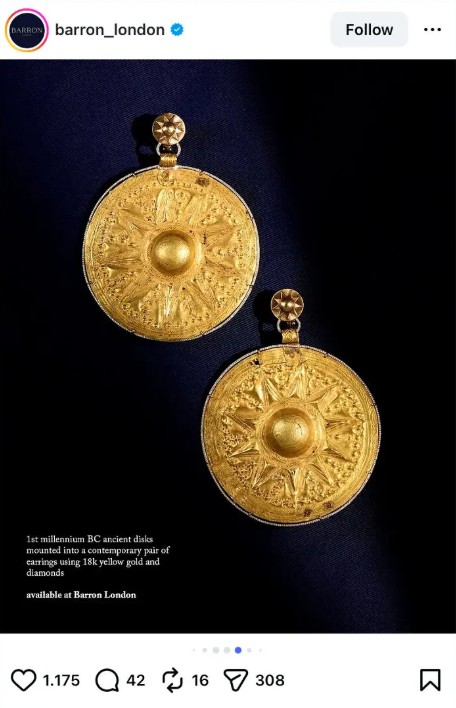
Millions of people may see photographs of Zendaya and admire nothing more than a pair of golden earrings. For archaeologists, however, these two pieces are far more than luxurious jewelry. They are fragments of Iran’s historical memory—objects that have passed through the heart of ancient civilizations, emerged from Kurdistan, traversed an unknown path through the international antiquities market, and today rest on the ears of one of the world’s most famous actors.
The story of Zendaya is neither about fashion nor Hollywood. Rather, it raises an old question: Who ultimately owns the world’s cultural heritage, and to what extent does the international community have the right to demand transparency regarding the fate of artifacts rooted in Iran’s history?
Amid all this, the researchers’ demand is clear: even if Barron London—the current owner of the medals—believes that they were acquired legally and legitimately, releasing their complete chain of ownership, or provenance, could resolve many ambiguities.
According to an explanation provided by the Barron London Collection, the gallery acquired the earrings after purchasing them from the renowned British jeweler Glen Spiro. Spiro did not make any alterations to the medals. Technically, the modifications associated with Spiro were far less damaging than the practices once commonly applied to ancient jewelry to make earrings.
However, as long as the ownership chain of these pieces remains unclear, many questions remain unanswered.