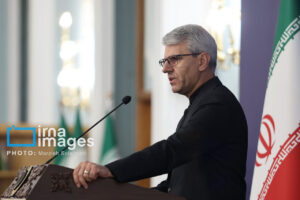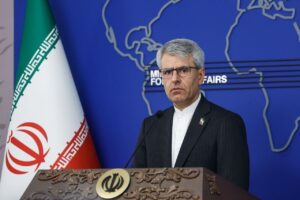
AVASH NEWS: Speaking at a weekly press briefing, Baghaei rejected reports suggesting ongoing Iran-U.S. talks, saying the only diplomatic contacts currently taking place are bilateral consultations with Muscat.
According to the spokesman, the discussions are aimed at establishing a temporary shipping route that would facilitate the safe passage of vessels through the Strait of Hormuz.
He said Iran and Oman are working to agree on the route as soon as possible, describing it as a temporary arrangement intended to ease commercial navigation.
Baghaei emphasized that the negotiations involve only Iran and Oman, although other countries could influence the process either positively or negatively.
He said an agreement on the proposed shipping lane would be a prerequisite for the full reopening of the Strait of Hormuz, but noted that it would not by itself resolve the broader issues affecting the waterway.
“The current situation in the Strait of Hormuz is not the result of differences between Iran and Oman,” Baghaei said, arguing that it stems from U.S. policies and actions.
He added that no change in the status of the strait should be expected as long as what Tehran describes as U.S. military aggression, naval blockade, and violations of its commitments continue.
Baghaei said issues related to Iran-U.S. relations could be addressed at a later stage depending on future developments, while current diplomatic efforts remain focused on consultations with Oman.
Iran’s Deterrence Prevents Further Hostile Actions
Responding to a question about reports that Saudi Arabia had played a role in preventing further attacks against Iran, Baghaei said regional countries have sought to contain instability and that Tehran welcomes such efforts.
He argued, however, that Iran’s military capabilities and deterrence remain the primary factor preventing further hostile actions.
Baghaei described the recent U.S. military campaign against Iran as an attack not only on Iran but also on regional security and stability.
He also said the U.S. military presence in the region and its use of facilities in some southern Persian Gulf states had contributed to increased regional instability.
Talks Focus on Temporary Central Shipping Lane
Addressing questions about the proposed shipping route, Baghaei said negotiations with Oman are centered on creating a temporary central navigation lane that would replace the existing northern and southern routes while safeguarding the sovereign rights of both countries.
He accused Washington of violating commitments reached under the June 18 understanding, saying Iran had fulfilled its obligations but the United States later launched large-scale attacks against the Islamic Republic before a month had passed.
According to Baghaei, the United States also reinstated what Iran describes as a naval blockade, revoked authorizations related to Iranian oil exports, and adopted additional measures that altered the situation.
He said efforts to activate the southern shipping route through Omani waters began shortly after the June 18 understanding, following the U.S. secretary of state’s regional visit and a joint statement issued with the foreign ministers of the Persian Gulf Cooperation Council.
Baghaei said Iran opposed the plan because of environmental and national security concerns.
He further claimed that some vessels using the southern route, with U.S. backing and the cooperation of certain regional states, were transporting military equipment rather than conducting normal commercial trade.
The spokesman said the current negotiations seek to merge the southern route in Omani waters with the northern route in Iranian territorial waters into a single central shipping lane that would protect the interests of both coastal states.
He added that the proposal calls for one two-way navigation corridor rather than multiple separate lanes, and said the arrangement would remain temporary until a permanent route is agreed upon in accordance with international maritime regulations.