In its place emerges a more fragmented, contested world marked by the rise of peer competitors, the resurgence of middle powers, and the recalibration of long-standing alliances. In this new environment, the costs of strategic overreach are growing, and the imperatives of restraint and realism are becoming unavoidable.
This essay explores the evolving architecture of American power and examines how its military, economic, and diplomatic instruments are being redefined in an era of multipolarity and intensified geopolitical rivalry. Special attention is given to the foreign policy posture of Donald Trump, whose transactional and disruptive worldview represents a decisive departure from traditional U.S. internationalism. By analyzing his approach to alliances, global trade, currency dominance, and conflict management—from Ukraine and Palestine to Iran—this piece argues that the logic of “America First” may yield outcomes far removed from its original promise. Indeed, without a disciplined recalibration, the United States risks undermining its own strategic position, inadvertently hastening the arrival of an order where American primacy is no longer assured. In other words, “America First” may inadvertently become “America Last.”
Sources of American power
Despite its strategic caution on the global stage, the United States remains a formidable force, with its influence rooted in three foundational domains: military strength, economic capacity, and technological leadership. These pillars are not static advantages, but dynamic and evolving sources of power, each facing new challenges and shifting global contexts. America’s military supremacy, though unmatched in spending and capability, now contends with the changing nature of warfare and the limits of hard power. Its economic dominance, long underpinned by the dollar and deep financial markets, faces rising competition, internal vulnerabilities, and growing calls for resilience and reform. In the sections that follow, we examine each of these pillars in turn, exploring how they shape U.S. power today—and how they will likely adapt under incumbent President Trump’s second administration to sustain it tomorrow.
Military power
The U.S. retains immense military power, but the nature of warfare is changing. The sheer size of the U.S. defense budget and its technological edge remain unparalleled. In 2024, the annual defense authorization totaled a record $886 billion. NATO allies collectively spent approximately $1.47 trillion (54% of global military spending) in 2024, with the U.S. alone accounting for roughly $967.7 billion (36% of the world total). European NATO members and Canada invested a combined $430 billion, reaching 2.02% of their collective GDP. Spurred by Russia’s invasion of Ukraine, Europe has sharply raised defense budgets, with 23 of 32 NATO states meeting or exceeding the 2%-of-GDP defense spending guideline in 2024, a significant increase from 10 in 2023 and three in 2014.
Yet power is not just about spending. The character of 21st-century warfare increasingly emphasizes technology and domains beyond the battlefield. America’s strength in satellites, drones, stealth, and networked warfare still sets a high bar, but adversaries are closing the gap. For instance, China’s military exercises assume a “joint blockade” of Taiwan relying on cyberattacks, space-based disruptions, and precision missiles. Russia, meanwhile, remains the most heavily armed nuclear power in the world and continues to modernize its strategic and conventional forces. It possesses advanced hypersonic missiles, sophisticated air defense systems, and one of the most capable electronic warfare arsenals globally. Its battlefield experience in Ukraine has accelerated the integration of unmanned systems, battlefield automation, and hybrid tactics, providing Moscow with a hardened military edge that cannot be dismissed. U.S. experts warn that dominance in cyber and space operations is just as critical as traditional means such as sea control. In response, Washington is investing heavily in new capabilities – from AI-enabled cyber defense to next-generation ISR satellites – to deter both Russia and China. As SIPRI notes, a significant portion of the U.S. budget now goes toward modernizing the nuclear arsenal and other advanced defenses in order to “maintain a strategic advantage over Russia and China.”
However, even with these investments, the United States faces the enduring limits of military power. The war in Ukraine highlights this reality: despite substantial U.S. and NATO assistance, a much smaller Russian economy has continued to challenge Ukrainian defenses. Similarly, the drawn-out conflicts in Afghanistan and Iraq demonstrated that territorial occupations often give rise to prolonged insurgencies, consuming vast resources with uncertain outcomes. In today’s era of cyber espionage, economic coercion, and proxy warfare, traditional large-scale military deployments have become increasingly costly and less effective. Patterns of restraint have emerged, with a greater emphasis on diplomacy, economic tools, and deterrence through technological and intelligence advantages. The U.S. global posture still includes extensive overseas bases and partnerships, but there is growing caution toward initiating large ground wars absent direct and immediate threats to national security.
Economic power
Alongside its military might, America’s economic power underpins its global influence. The U.S. economy—projected at about $30 trillion in 2025—still accounts for roughly a quarter of world GDP. Its strength lies in diversity and innovation: Silicon Valley and Wall Street drive cutting-edge tech and deep capital markets, while industries like aerospace, pharmaceuticals, and advanced manufacturing remain globally competitive. Since the 2020s, the U.S. has outpaced many other advanced economies in growth. A key pillar of this economic clout is the dominance of the U.S. dollar. As the world’s premier reserve currency, the dollar plays a central role in global trade, finance, and central bank reserves. According to IMF data, roughly 58% of global foreign-exchange reserves are held in dollars—far more than any other currency. International commodities like oil are priced in dollars, global debts are often dollar-denominated, and cross-border transactions are heavily channeled through U.S. financial institutions. This confers extraordinary leverage to the United States: by restricting access to the dollar system or to global payment networks like SWIFT, Washington can impose sanctions with wide-reaching economic consequences. The dollar’s centrality gives the United States a unique ability to shape the global financial environment to its advantage.
However, the economic balance is shifting. China’s economy is rapidly growing and diversifying. Long known as “the world’s factory,” it dominates many manufacturing sectors and has become a leader in green technology—for example, producing the majority of the world’s solar panels. In recent years, Beijing has heavily subsidized emerging tech champions (Huawei, Tencent, BYD, etc.), and these companies now compete globally. With its vast population and investment-driven growth, China’s economy has become an equal to the U.S. in many respects, even if it still relies more on exports and state-led investment than on household consumption. Other emerging powers are also rising. For instance, India is projected to become the third-largest economy by the early 2030s, and regional blocs like the EU remain huge economic players in aggregate.
These trends mean the United States can no longer assume it will lead in all sectors by default. While it continues to excel in areas such as R&D, higher education, and high-tech industries, several vulnerabilities persist. Chronic deficits in goods trade, aging infrastructure, and rising public debt—now exceeding $34 trillion—pose long-term structural challenges. High debt levels, combined with rising interest rates and political gridlock over fiscal policy, have raised questions about the sustainability of U.S. financial dominance. At the same time, many countries are increasingly exploring alternatives to the dollar in international transactions, including bilateral trade in local currencies and efforts to build digital payment systems outside U.S. control. Multilateral initiatives such as BRICS have also advanced de-dollarization agendas, with member states promoting greater use of their national currencies in trade and financial cooperation. Although the dollar remains the world’s leading reserve and transaction currency, these developments signal a gradual erosion of its formerly unchallenged status.
Congress has responded to some of these pressures with measures like the CHIPS Act and bipartisan infrastructure bills aimed at revitalizing American manufacturing and innovation. Meanwhile, global supply chains are shifting as countries seek to reduce dependence on China, creating both new risks and new openings for U.S. firms. In sum, American economic power remains significant, but its continued strength cannot be taken for granted. It increasingly depends on active adaptation, addressing structural weaknesses at home while navigating a global economy that is becoming more competitive and less dollar-centric.
Particularities of Trump’s approach
Donald Trump’s foreign policy is characterized by a sharp departure from traditional American internationalism, defined instead by transactionalism, economic nationalism, and strategic ambiguity. This approach cuts across alliances, trade, currency hegemony, climate, and conflict resolution. One emerging feature of Trump’s strategy is the deliberate management of instability. Crises are not always prevented; instead, they are sometimes fostered or allowed to fester, providing opportunities for U.S. intervention that can reshape regional orders in America’s favor.
Trump on traditional alliances and NATO
Trump’s approach to U.S. grand strategy represents a marked break from the postwar consensus, reflecting a worldview that is explicitly transactional and strategically selective. In contrast to traditional internationalism, Trump has consistently questioned the utility of multilateral alliances, often framing them as outdated entanglements that impose asymmetric burdens on the United States. He has portrayed long-standing partnerships as conditional, emphasizing a cost-benefit logic in which foreign commitments must yield tangible, short-term returns. His recurring demand that allies “pay their fair share” or risk forfeiting American protection is emblematic of a broader philosophy that recasts alliances as negotiable contracts rather than enduring strategic obligations.
This mindset has been most apparent in Trump’s stance toward NATO and the European Union. He has repeatedly criticized European members of NATO for underinvesting in defense, at one point labeling the alliance “obsolete” unless contributions align with U.S. expectations. Reports suggest that he has, at times, framed NATO as a form of protection that requires payment, allegedly warning leaders that failure to meet financial thresholds could result in the withdrawal of U.S. troops. The broader implication of such rhetoric is the downgrading of collective security into a transactional arrangement, more akin to a commercial insurance policy than a shared strategic vision.
His views on the European Union reflect similar skepticism. Trump has reportedly dismissed the EU as a mechanism for advancing German economic interests and has treated it less as a partner and more as a competitor. Public statements and private remarks alike have framed the EU as a beneficiary of American security guarantees without commensurate reciprocity. This perception has driven a more confrontational stance toward European integration and raised questions about Washington’s long-term commitment to transatlantic solidarity.
The implications of this recalibration extend beyond Europe. Strategically, Trump’s foreign policy has increasingly pivoted toward the Indo-Pacific, where he views the rise of China not merely as a challenge but as a systemic rival. In contrast, his relative detachment from European security—illustrated by suggestions that Russian threats should be Europe’s problem unless NATO members increase their defense spending—reflects a diminished prioritization of the European continent. This shift underscores a broader reassessment of U.S. alliances, in which legacy partnerships are scrutinized through the lens of efficiency and utility.
Trump’s Stance on the Dollar’s Dominance
Beyond alliances, Trump has consistently emphasized the importance of maintaining the U.S. dollar’s role as the world’s primary reserve currency, recognizing it as a cornerstone of American geopolitical power. He understands that the dollar’s dominance enables the United States to project influence globally through the financial system, particularly by imposing sanctions on adversaries like Iran, Venezuela, and Russia. This ability to weaponize finance gives Washington a powerful non-military tool to enforce its foreign policy objectives. Consequently, Trump views attempts by BRICS nations and others to create alternative financial systems or currencies as direct threats to U.S. interests. In response, he has signaled a willingness to impose economic sanctions or trade penalties on countries seeking to reduce reliance on the dollar. Despite this, some of his own policies—such as trade wars and unpredictable monetary rhetoric—may ironically fuel the global trend toward de-dollarization, a shift he would likely counter with increased economic coercion.
Trump’s Approach to Trade
In the realm of trade, Trump’s policy is rooted in a transactional and protectionist worldview that diverges sharply from the traditional American commitment to multilateral, rules-based trade systems. Rather than seeing trade as a platform for global cooperation, Trump treats it as a zero-sum contest in which America must emerge as the winner. He frequently employed tariffs to protect domestic industries and as strategic leverage in negotiations, notably during the trade war with China and in threats against European automobile exports. Trump’s disdain for long-standing institutions like the World Trade Organization stems from his belief that they infringe upon U.S. sovereignty and limit Washington’s freedom to act unilaterally. He prefers bilateral deals where American economic dominance can be used to extract favorable terms, viewing short-term political and economic wins—such as job repatriation and trade balance adjustments—as more valuable than the long-term resilience of the global trading system.
Trump’s climate policy
On climate change, Trump has demonstrated consistent skepticism and a clear prioritization of fossil fuel interests over environmental protection. His withdrawal from the Paris Climate Agreement reflected a belief that international climate commitments were unfairly punitive toward the U.S., while allowing major emitters like China and India to operate under looser constraints. He framed these agreements as economically harmful and burdensome for American workers and industries. Instead, he promoted an “energy dominance” agenda, seeking to expand domestic oil, coal, and natural gas production as pillars of national strength and independence. This approach was accompanied by a sweeping rollback of environmental regulations, as federal agencies under his administration weakened emissions standards and opened protected lands to industrial development. Trump’s public rhetoric further reinforced this stance, often mocking scientific consensus and portraying environmental initiatives as expensive and anti-American.
Given Trump’s worldview and strategic approach, how would he handle the most challenging international crises? The following cases—Ukraine, Israel-Palestine, and Iran—illustrate how he might apply his “America First” philosophy on the world stage.
Trump and the Ukraine conflict
Trump’s approach to the Ukraine–Russia conflict suggests a preference for a fragile ceasefire rather than a lasting resolution. While he has been publicly critical of U.S. aid levels to Ukraine and has often praised strongman figures like Vladimir Putin, Trump does not appear committed to securing Ukrainian sovereignty through an enduring peace. Instead, he seems inclined toward negotiating a temporary truce that halts active combat without addressing deeper territorial or security issues. Such an outcome would allow the United States to maintain strategic leverage. Russia would remain tied down and weakened, unable to assert itself more broadly on the world stage; the European Union, grappling with instability on its periphery, would find it harder to cohere as a rival bloc to Washington; and Ukraine’s rich reserves of critical minerals—such as lithium and rare earth elements—could be opened up to U.S. economic influence, securing long-term American access. For Trump, Ukraine is less a cause in itself than a geopolitical asset to be leveraged in the broader balance of power.
Trump’s stance on the Israel–Palestine conflict and the Middle East
In the Middle East, Trump’s approach to the Israel–Palestine conflict exemplifies his broader tendency to reframe complex issues through transactional, disruptive narratives that prioritize American leverage. Rather than addressing the historical and political depth of the Israeli–Palestinian issue—shaped by decades of occupation, displacement, and failed diplomacy—he reduces it to an economic redevelopment challenge. His recent proposal to transform Gaza into a Middle Eastern “Riviera,” contingent on the displacement of its residents, illustrates this pattern. Such rhetoric ignores the profound historical and emotional ties Palestinians hold to the land and bypasses the legal and humanitarian dimensions of the crisis. By recasting a protracted struggle as an investment opportunity, Trump blurs the line between economic vision and strategic destabilization, positioning the United States as an indispensable broker, even as it sidelines core grievances.
In other words, by floating such provocative ideas, Trump inserts ambiguity into U.S. policy and creates confusion about Washington’s objectives. This approach positions the United States as an ostensibly indispensable arbiter capable of “unlocking” the region’s potential. This deliberate destabilization of consensus narratives—coupled with selective diplomatic engagement and rhetorical volatility—enables Washington to maintain strategic leverage, dictating the terms of future negotiations while forestalling the emergence of alternative mediators. In essence, Trump leverages disruption as a tool of control, turning uncertainty into a strategic asset that reinforces America’s centrality in shaping outcomes on its own terms.
Trump’s disruptive narrative on Gaza may also be motivated by a deeper political undercurrent, marked by the emergence of “Israel fatigue” in Washington. Once a bedrock of bipartisan consensus, unwavering U.S. support for the Israeli regime is increasingly being questioned, particularly as the Gaza conflict grinds on with mounting humanitarian costs and limited strategic upside. Recent shifts in American public opinion reflect this fatigue: a 2024 Pew survey revealed that for the first time, a majority of Americans (53%) hold an unfavorable view of Israel—up sharply from previous years. Sympathy for the Israeli regime has declined, especially among younger Americans, while empathy for Palestinians has risen amid growing media attention to civilian casualties and a wave of pro-Palestinian protests on college campuses and in urban centers. This discontent is not limited to the public. In Washington, policy analysts and think tanks have begun openly describing the U.S.–Israel relationship as a strategic liability. Since early 2024, an unprecedented number of expert commentaries have argued that the Gaza war has exposed numerous negative effects of the alliance, particularly in weakening America’s regional credibility and global moral standing. Even within Trump’s own party, signs of discomfort have surfaced. Figures like Senator Rand Paul have publicly warned against deepening U.S. involvement, framing it as another costly entanglement with little strategic return.
In this context, Trump’s rhetorical reframing of the conflict—transforming it from a humanitarian and political crisis into a speculative economic opportunity—may serve not only to assert American control over the peace narrative but also to deflect domestic pressures. By pivoting the conversation toward redevelopment and investment, he circumvents contentious debates about moral responsibility or military aid, presenting an alternative vision that resonates with voters weary of endless wars and costly alliances.
Trump’s strategic calculus and the Iran test case
To understand Trump’s stance on Iran, one must first grasp Iran’s outsized geostrategic importance. The Middle East as a whole is an inherently vital region, sitting at the crossroads of three continents, linking Europe, Asia, and Africa. This position has for millennia made the Middle East a nexus of trade routes and imperial ambitions, a role only amplified in modern times by its massive energy reserves. Within this pivotal region, Iran occupies a central place both geographically and civilizationally. It stretches from the Persian Gulf and the Strait of Hormuz (a chokepoint through which a significant share of the world’s oil transits) up to the Caspian basin, literally at the “crossroads of three continents.” Iran is also heir to one of the world’s oldest continuous civilizations, endowing it with a proud national identity and historical weight. Iranian leaders often stress that Iran’s “well-developed civilization and historic independence” earn it recognition as a major power in the region.
In concrete terms, few countries rival Iran’s combination of assets. It controls vast oil and gas deposits—about 12% of the world’s oil reserves and 17% of global proven gas reserves—independently of foreign powers. Unlike many of its neighbors, Iran’s petroleum sector is largely nationally owned and not dominated by Western corporations, a legacy of its 1950s resource nationalization and decades of sanctions. Finally, Tehran has a long tradition of sovereign, principle-driven foreign policy. Since the 1979 Islamic Revolution, the Islamic Republic has defiantly pursued an independent course epitomized by the revolutionary slogan “Neither East nor West,” declaring that Iran would align with neither superpower bloc and would chart its own path. This civilizational confidence, strategic geography, resource independence, and policy sovereignty combine to make Iran a linchpin of the Middle East’s balance of power.
Pragmatism over conflict – “Deal” instead of War
Viewing Iran through Trump’s “America First” lens—one defined by cost-benefit pragmatism and great-power rivalry—it is likely he would seek to avoid open military escalation and instead pursue a diplomatic track. Trump’s record and instincts indicate a reluctance to entangle the U.S. in new Middle East wars, even as he pressures adversaries. This cost-conscious calculus was on display in June 2019, when Trump called off airstrikes on Iran minutes before impact upon learning of the high human cost it would entail on both sides. A former aide underscored Trump’s aversion to war with Iran: “He doesn’t want war with Iran.” All of this suggests that a Trumpian strategy toward Iran would emphasize brinkmanship and pressure, but stop short of a full-blown military confrontation. Trump’s own transactional instincts bolster this expectation: he consistently seeks leverage for a “better deal” rather than plunging into costly fights. Tellingly, even at the height of U.S.–Iran tensions, Trump signaled openness to diplomacy—at one point stating he’d meet Iran’s president “without preconditions” if it could defuse the conflict. This willingness to negotiate indicates he would prefer striking a grand bargain with Tehran to secure U.S. aims rather than starting another Middle East war. In Trump’s view, a negotiated outcome that neutralizes the Iranian challenge at an acceptable cost would be the ultimate “deal.” Meanwhile, saber-rattling and strategic ambiguity—keeping Iran guessing about U.S. intentions—would be used tactically to strengthen Washington’s hand at the negotiating table without actually unleashing a ruinous conflict.
Balancing great-power rivalry
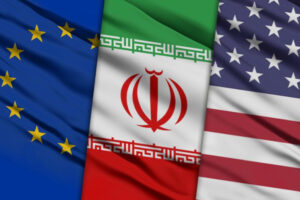
Another decisive factor in Trump’s approach to Iran is the global chessboard—namely, the competition with China. Trump sees China as America’s foremost strategic rival, and this rivalry would heavily inform his Iran policy. A war with Iran would almost certainly drive Tehran directly into Beijing’s arms, binding Iran economically and militarily to America’s top competitor. In recent years, Tehran and Beijing have already drawn closer under U.S. pressure, signing a sweeping 25-year strategic partnership in 2021 involving $400 billion of potential Chinese investment in Iran’s sanctioned economy in exchange for a steady supply of heavily discounted Iranian oil to China. U.S. intelligence and foreign policy experts warn of a “powerful new anti-U.S. axis” forming among China, Russia, and Iran. A savvy Trump would understand that launching hostilities against Iran could cement such an axis by leaving Tehran no choice but to pivot fully toward Beijing (and Moscow) for support. That outcome would be strategically disastrous for Washington: it would undermine U.S. influence across the entire Eurasian supercontinent and turn Iran into a lever for Chinese power projection in the Middle East. In essence, Trump would try to play great-power chess, leveraging Iran’s desire for sanctions-lifting to prevent China from gaining a permanent foothold in Tehran. This means doubling down on diplomacy (however unconventional in style), because a stable U.S.–Iran understanding would directly thwart China’s opportunity to capitalize on continued U.S.–Iran enmity. In Trump’s cost-benefit calculus, courting an elusive “better deal” with Iran beats the unpredictable fallout of war—especially if war would only push Iran deeper into the Sino-Russian camp and weaken America’s strategic position in the long run.
“America First” or “America Last”?
Ultimately, Trump’s likely Iran approach reflects a broader strategic calculus rooted in preserving U.S. leverage without overcommitting in complex foreign entanglements. From his vantage point—or that of a strategist advising him—direct confrontation with Tehran serves a signaling purpose but is not necessarily the endgame. Confronting Tehran aggressively may placate domestic hawks and signal strength, but it also risks triggering strategic blowback in today’s multipolar landscape. In this view, an unbalanced or overly belligerent Iran policy could push Tehran deeper into the China–Russia axis, accelerating the very Eurasian consolidation that threatens to diminish American influence.
Such an outcome would gravely undercut America’s standing in the international system. The irony is stark: without deft stewardship, “America First” could end up as “America Last” – a diminishment of U.S. primacy in a transformed global order. Trump’s own instincts hint at an understanding of this reality. His transactional, cost-aware approach to Iran is arguably an attempt to avoid strategic overreach and prevent precisely such an unfavorable reversal.
Conclusion
In today’s rapidly evolving international landscape—characterized by intensifying great-power rivalry, swift technological disruption, and the unraveling of many of the assumptions that once underpinned global order—the United States is confronted with a pivotal strategic dilemma. It must decide whether to continue pursuing the expansive and interventionist posture that defined its unipolar moment, or to undertake a more disciplined reassessment of its global role. This essay has argued that adopting strategic restraint is a more prudent and necessary adaptation to a world in which power is more widely distributed, global interdependence is deeper, and the risks of miscalculation are significantly higher.
Seen in this context, Donald Trump’s foreign policy, though frequently criticized for its unpredictability and rhetorical volatility, can be interpreted as part of a broader shift in American strategic thinking. It reflects a growing recognition that sustaining U.S. primacy in a multipolar world demands a new strategic calculus. This evolving logic favors leverage over occupation, strategic ambiguity over rigid commitments, and selective engagement over blanket intervention. In his approach to alliances, global trade, Middle East conflicts, and especially Iran, Trump has adopted a form of strategic minimalism. This approach is defined by transactional thinking, cost-awareness, and a clear reluctance to become entangled in protracted conflicts. While this posture is far from consistent or universally effective, it reveals a core insight. American power is best preserved not through constant exertion, but through disciplined and targeted application. In essence, Trump’s instincts suggest a broader evolution in U.S. grand strategy. This new orientation seeks to conserve rather than expend influence, and to adapt rather than overextend in a world that is no longer shaped by unchallenged American dominance.