
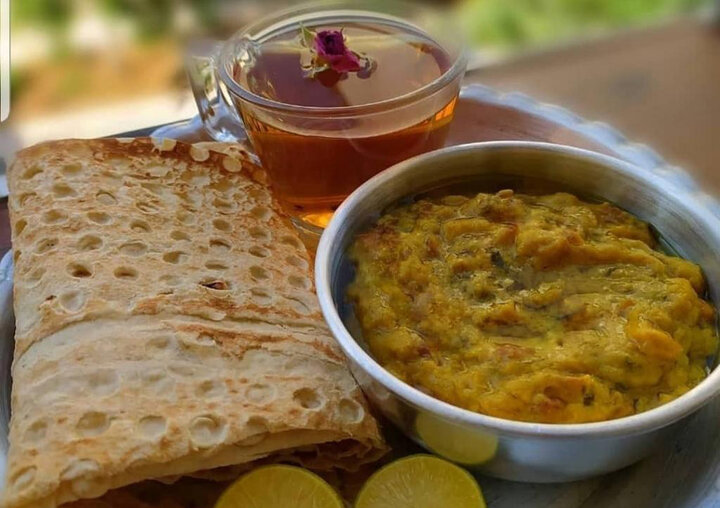
Before sunrise during Ramadan, a thick, herb-scented ash simmers slowly in kitchens across southern Iran. Known as Ash Sabzi, this traditional pre-dawn meal has become a defining part of Ramadan food culture in the historic city of Shiraz.
For generations, families have relied on this nutrient-dense dish to sustain them through long hours of fasting. More than a regional specialty, Ash Sabzi represents how food and faith intersect in everyday Iranian life during the holy month.
Ash Sabzi is regarded as one of the oldest ritual dishes associated with Ramadan in Iran’s Shiraz. Unlike lighter soups common in other parts of Iran, this ash is thick, cohesive, and slow-cooked for hours to achieve its signature texture.
Preparation begins late at night and continues until just before the dawn prayer. The ingredients include:
Lamb
Broken rice
Chickpeas
Beans
Lentils
Fresh herbs such as leek, tarragon, and dill
Some households add a small amount of parsley. What distinguishes the dish, however, is technique rather than variety of ingredients. Long cooking over low heat and constant stirring give Ash Sabzi its dense, elastic consistency.
In several older neighborhoods, large pots are still prepared collectively as Ramadan approaches dawn — a reminder of the dish’s communal roots.
Javad Zarezadeh, a veteran cook from Shiraz, says the quality of Ash Sabzi depends on sequencing and precision.
Legumes are soaked and partially cooked separately to improve digestibility and ensure uniform texture. Lamb is simmered slowly to extract its flavor, then pounded before being returned to the pot. Combined with broken rice, this method produces the ash’s characteristic thickness.
The timing of adding herbs is critical. Tarragon and leek shape the dish’s aromatic identity, but excessive heat can dull their flavor and color. Continuous stirring toward the final stages prevents sticking and ensures cohesion. Fried onions are typically added at the end as a finishing layer of flavor.
According to Zarezadeh, Ash Sabzi is not simply a traditional recipe — it is an essential part of Ramadan identity in Shiraz.
Nutrition specialists note that the dish’s structure aligns closely with the needs of those fasting from dawn until sunset.
Zahra Memari-Panah, a senior nutrition expert, explains that the combination of protein and fiber helps maintain satiety for longer periods while reducing blood sugar fluctuations. Broken rice provides complex carbohydrates that release energy gradually, helping prevent midday fatigue.
The herbs contribute vitamins and antioxidant compounds that support immune function. Iron from legumes and lamb may also reduce weakness and exhaustion. However, she advises moderation in oil and fried onions to prevent heaviness or excessive thirst during fasting hours.
When consumed in appropriate portions and accompanied by sufficient fluids, Ash Sabzi can serve as a balanced and practical suhoor meal.
Despite changes in urban lifestyles, Ash Sabzi continues to hold its place on Ramadan tables. Passed down across generations, it remains a culinary symbol of continuity — a reminder that food traditions often outlast social shifts.
Each Ramadan, as kitchens stir to life in the final hours before dawn, the aroma of slow-cooked herbs signals more than a meal. It signals heritage.