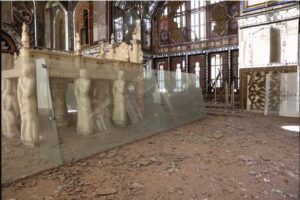
Avash News: Hospitals must be among the safest places in the world amid any conflict. But in the course of the recent US-Israel war against Iran, several hospitals, including Gandhi Hospital in Tehran and a number of emergency stations, were reportedly attacked. An incident that not only raised widespread concerns among families of patients but also, once again, drew attention to the discussion on observing international humanitarian law and safeguarding medical infrastructure in wars.
Hospital: the last shelter in war
In all wars, there is a fundamental principle: hospitals must be protected against conflicts. The philosophy is simple. Under the conditions that violence and destruction are underway on the battlefield, hospitals and medical centers must remain places to save human lives.
In doing so, in international humanitarian law, safeguarding hospitals and medical staff constitutes one of the fundamental principles. In many modern conflicts, attacks on hospitals rapidly face condemnation from international institutions and human rights organizations.
However, reports on the recent damage to Iran’s medical centers show that this red line has been exposed to danger again.
At least 12 medical centers in Iran have suffered damage
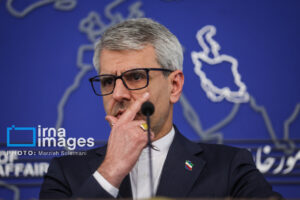
Mohammad Sadeq Motamedian, Tehran governor, has declared that in the course of the recent attacks, at least 12 medical centers in Tehran have seen damage. He added that some of the damaged medical units were those that offered direct medical and relief services to citizens.
He emphasized that plans had been devised to manage the crisis as a number of medical infrastructures witnessed damage. According to these plans, patients in damaged centers were relocated to other medical centers rapidly so that the process of offering medical services was not disrupted.
Gandhi Hospital, rapid evacuation of patients
Damage to Gandhi Hospital in Tehran drew much attention as it was severely attacked. Gandhi was among the most famous hospitals in Tehran.
According to the head of the hospital, after the aggression, the medical staff began evacuating patients very fast. In a short time, patients were transferred to other hospitals across the city.
Managing circumstances in sensitive sections such as the Intensive Care Unit was one of the main challenges. However, officials related to the hospital have announced that all patients in need of special care received care services immediately.
Experts’ estimations show that losses inflicted on the hospital stand at 1400 billion tomans and sections of medical equipment and infrastructure have been damaged.
How WHO reacted
The damages to Iran’s medical centers and hospitals were so severe and widespread that they drew the attention of international bodies.
The head of the World Health Organization, Dr. Tedros Adhanom Ghebreyesus, in a message on the social network X, announced that medical centers, patients, and the staff of the health sector have been affected in the course of the conflicts in Iran.
He wrote that reports indicate explosions near Shahid Motahari Hospital in Tehran. These explosions damaged parts of the medical center and caused the rapid evacuation of patients and staff.
According to him, in addition to Tehran, two emergency medical care centers in the cities of Hamedan and Sarab have undergone damage and at least two staff members have been injured.
The WHO chief emphasized in his message: “In times of crises, hospitals are needed more than at any other time. Safeguarding medical centers, the staff, the healthcare sector, as well as patients must be guaranteed under all these conditions.”
Medical centers that were affected
According to reports, in addition to hospitals, some emergency stations and relief centers have also been damaged. The list is as follows:
• Damage to emergency medical centers
• Attack in the vicinity of Motahari Hospital and emergency evacuation of patients
• Damage to Khatam Al-Anbia Hospital
• Attack on Gandhi Hospital
• As well as attacks on some Red Crescent centers
Such incidents are important regarding international humanitarian law because medical and relief centers are under the protection of this legal system.
An attack on hospitals is an example of a war crime
It should be noted that, according to international criminal law, attacks on hospitals also have a special status. According to the Rome Statute, deliberate attacks on hospitals, medical centers, or places where patients or the injured are kept, in case these centers are not military targets, amount to a war crime.
Why are hospitals red lines?
In the end, the importance of safeguarding hospitals is not just a legal issue but also a humanitarian one. In every war, hospitals are the only places that, regardless of nationality, religion, or political stance, try to save human lives.
Nurses, doctors, and relief workers play a vital role in reducing human suffering under these conditions.
Because of all these reasons, the international community has made efforts over the past couple of decades to define hospitals as safe places. But the experience of modern conflicts shows that this red line has been ignored at times on battlefields, which every time revives the necessity to strengthen international law and the responsibilities of the parties involved in wars.