Avash News: Baqaei emphasized that Iran’s nuclear program began in the 1960s and 1970s with U.S. support; the first Iranian reactor, the Tehran Research Reactor, was built by American companies. He noted that this is the second time in nine months that Iran has been targeted while engaged in negotiations.
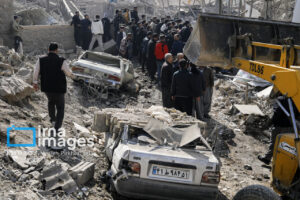
Referring to recent events, Baqaei said that the Ministry of Foreign Affairs building in southern Tehran, near the Supreme Leader’s residence, was struck by more than 28 missiles, causing numerous casualties, including the Supreme Leader.
He reiterated that the Supreme Leader, based on a religious decree, prohibits the development of nuclear weapons, and that producing any weapons of mass destruction is forbidden in Islam. The Leader has worked to advance Iran’s economic development and strengthen its defense capabilities, drawing on the lessons of the eight-year war with Saddam Hussein in the 1980s.
Baqaei called the attacks on Iran and the assassination of its leaders unprecedented, extremely dangerous, and illegal, with serious consequences for the region and the international community. He stressed that such actions violate the UN Charter’s principles of sovereignty and territorial integrity.
Following the attacks, a temporary council comprising the Chief Justice, the President, and a representative of the Guardian Council has been formed, with the Assembly of Experts expected to select a new Supreme Leader within days.
Regarding domestic protests, Baqaei stated that peaceful demonstrations are respected under Iran’s constitution. Initial protests were peaceful, but from January 8–10, armed elements entered gatherings, targeting both protesters and security forces, resulting in over 3,170 deaths, including police, protesters, and civilians. He emphasized that all human lives are valuable and Iranian. He also criticized misinformation campaigns suggesting the unrest was entirely spontaneous, noting that some foreign actors encouraged violence.
Baqaei stressed that Iranians should decide their own political future, free from external interference, citing the 1979 revolution as an example of the people asserting their independence.
He condemned U.S. and Israeli attacks as unprovoked, illegal violations of the UN Charter and international law. The attacks included strikes on a primary school in Minab, killing over 158 young girls, hospitals in central Tehran, and even Red Crescent personnel. Baqaei affirmed that Iran is a peace-loving nation and has not attacked other countries in the past century.
On the possibility of renewed negotiations with the U.S., Baqaei stated that Iran had been attacked twice during prior negotiations, so its entire focus is now on defending its nation. He described the conflict as unjustly imposed on Iran and affirmed that the country’s approach is resilience and defense against this injustice.