Avash News: Rafael Grossi made these remarks on Monday during a press briefing on the sidelines of the Board of Governors meeting.
“The Agency is always ready to play a role in the nuclear negotiations. “We have all the necessary information about Iran’s nuclear program. We also have the expertise to help negotiators assess the feasibility of some of their proposals. It is up to them to accept or reject them. But we are fully prepared.
My hope, as I said, is that we return to the negotiating table as soon as possible. Clearly, after the end of this military conflict—which we all hope will happen very soon—we will still need a long-term, sustainable solution: one that provides predictability and assurance for both Iran and neighboring countries. I consider this extremely important, and the Agency has a fundamental and irreplaceable role in this process.
My assessment is based on the fact that Iran has a large and ambitious nuclear program, and we do not have all the access we should. At the same time, even before the twelve-day war, I stated that we had seen no evidence of a structured program to produce nuclear weapons. This is the Agency’s assessment. Of course, other countries may have additional information or political considerations, which are not for me to confirm or deny.”
The extraordinary meeting of the Board of Governors of the International Atomic Energy Agency on Iran began with a speech by the agency’s director general. At the opening of the meeting, the director general said that so far there has been no indication that Iran’s nuclear facilities were targeted or damaged in what he described as aggressive attacks by the United States and the Zionist regime, and he called on all parties to exercise restraint in the conflicts in West Asia.
Rafael Grossi began his speech at the extraordinary Board of Governors meeting on Iran. The meeting was held at Moscow’s request one hour before the regular quarterly Board session.
Grossi, director general of the IAEA, said Monday in his opening remarks at the extraordinary session — convened at Moscow’s request following repeated attacks by the United States and the Zionist regime on Iran — that so far there has been no sign that Iran’s nuclear facilities have been damaged or targeted.
He added that efforts to contact Iran’s nuclear regulatory authorities are continuing and no response has yet been received. He expressed hope that this essential communication channel would be restored as soon as possible. Grossi added that all parties should exercise the utmost restraint in all military operations.
The director general said once again that all sides must exercise maximum caution to prevent further escalation of tensions.
Emphasizing that “we must return to diplomacy and negotiations,” he said the current situation is highly worrying and that the possibility of radioactive release with serious consequences — including the need to evacuate areas the size of or larger than major cities — cannot be ruled out.
Grossi said the agency is closely monitoring military attacks in Iran and across West Asia with concern. He added that attacks on nuclear facilities are unacceptable and could lead to radioactive releases with major consequences.
He further stated that he calls for a return to diplomacy and negotiations to obtain long-term guarantees that Iran will not acquire nuclear weapons. The director general said the agency stands ready to participate and play a role in any potential negotiations on Iran’s nuclear program.
Iran’s representative: Natanz facility was attacked
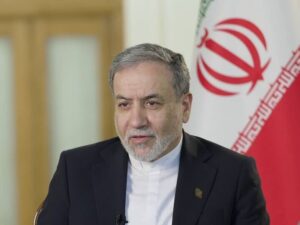
Reza Najafi, Iran’s representative to international organizations in Vienna, told the extraordinary IAEA Board meeting that the Natanz nuclear facility was attacked in what he described as U.S.–Zionist aggression in the month of Esfand.
Speaking at the meeting, Najafi said in response to a question about which Iranian nuclear sites had been targeted in the attacks that began on February 28, that the Natanz nuclear facility had been struck.
Ulyanov: sole aim of U.S. and Israel is to overthrow Iran’s legitimate government
Mikhail Ulyanov, Russia’s representative in Vienna, condemned what he described as aggressive attacks by the United States and the Zionist regime against Iran, saying that these actions and statements by officials in Washington and Tel Aviv show that diplomatic negotiations were merely a cover for the goal of overthrowing the Iranian government.
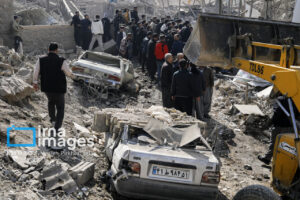
In a statement delivered at the extraordinary Board meeting — convened at Moscow’s request following repeated attacks — Ulyanov also conveyed condolences on behalf of the Russian Federation to the Iranian people over the death of Ayatollah Ali Khamenei and what he described as a “brutal massacre” in an attack on a girls’ school in Minab.
In the statement, published on the website of Russia’s Vienna mission, he condemned the “military aggression” against Iran that began on February 28 and whose “destructive consequences have spread to countries in the region.”
Referring to the fact that the attacks occurred amid diplomatic talks between Tehran and Washington on Iran’s nuclear program — similar to attacks carried out in June — he said that once again negotiations on Iran’s nuclear program, this time with the direct participation of the IAEA director general, were used as cover for an attack. He added that at the center of U.S. leadership rhetoric and threats are Iran’s nuclear facilities, which are under a comprehensive safeguards agreement with the agency.
The senior Russian diplomat said that statements by U.S. and Israeli authorities now leave no doubt that the sole aim is the overthrow of Iran’s legitimate government and the destruction of the country as an independent state. In other words, concerns expressed over the past quarter-century about Iran’s nuclear program were merely a pretext for pursuing this goal. This, he said, proves that nuclear non-proliferation rules in Washington are viewed only as a tool for political score-settling with countries whose independent policies and choices are unacceptable.
The attacks by the Zionist regime and the United States, again accompanied by what were described as unfounded claims about military aims in Iran’s nuclear program and an existential threat from its missile program, began on February 28 amid indirect Tehran–Washington talks on Iran’s nuclear program and the lifting of U.S. sanctions.
The meeting is being held as repeated attacks by the United States and the Zionist regime continue during negotiations between Tehran and Washington on resolving Iran’s nuclear issue and lifting sanctions.
The United States and the Zionist regime had also carried out coordinated military strikes in June against military centers and nuclear facilities associated with Iran’s peaceful nuclear program.
The Chinese broadcaster CGTN reported the Natanz attack citing Iran’s representative, while Grossi said at the same meeting that the agency has seen no indication that Iranian nuclear facilities were targeted or damaged in the latest attacks.
Today’s session was convened at Moscow’s request amid what were described as repeated attacks against Iran’s national sovereignty and territorial integrity. Like the June strikes, they took place during indirect Tehran–Washington negotiations over Iran’s nuclear program and sanctions relief.
In the June attacks, the facilities at Natanz, Fordow and Isfahan nuclear facility — all under IAEA safeguards — were targeted by U.S. bunker-buster bombs and strikes by the Zionist regime.
Despite claims by U.S. President Donald Trump after the June attacks that Iran’s nuclear program had been destroyed, allegations that Iran sought to resume uranium enrichment, that its program had military aims, and that its missile program posed a threat were cited as justification for renewed attacks against Iran’s sovereignty and territorial integrity.
The attacks, according to the text, resulted in the deaths of Iran’s supreme leader, senior military commanders, and civilians.
In response, Iran’s armed forces targeted occupied territories as well as U.S. bases and interests in the region with missile and drone strikes.
Earlier, Russia’s Vienna mission stressed in a statement that the message of these actions is especially troubling: instead of creating opportunities for meaningful negotiation results, military pressure is being used. This damages the broader structure of nuclear non-proliferation and shows that even in advanced stages of diplomacy, the military factor can be used as a means of influence.
The mission added, referring to the June strikes carried out during indirect Tehran–Washington talks, that the IAEA should not ignore the issue. Russia has repeatedly stressed that the attacks carried out last June against facilities under IAEA safeguards were not met with a clear public assessment or condemnation from the agency. Consistency and principled positioning by the agency, it said, are vital for maintaining confidence in international control and non-proliferation rules.
Grossi: Iran’s nuclear facilities not targeted in latest attacks
Grossi reiterated Monday in his opening remarks at the extraordinary Board session — convened at Moscow’s request following renewed attacks — that the agency has so far seen no indication that Iran’s nuclear facilities were damaged or targeted.
He added that efforts to contact Iranian nuclear authorities continue without response and expressed hope the channel would soon be restored.
Grossi again urged all parties to exercise maximum restraint in military operations and take the greatest care to avoid further escalation.
Stressing that diplomacy must resume, he warned that the situation is extremely worrying and that the possibility of radiological release with serious consequences — including evacuations of areas as large as or larger than major cities — cannot be ruled out.
The attacks by the United States and the Zionist regime, again framed as responses to alleged military aims in Iran’s nuclear program and missile threat, began on February 28 amid indirect Tehran–Washington negotiations on the nuclear issue and sanctions relief.
According to the text, the attacks resulted in the deaths of Iran’s supreme leader, some senior military commanders, and civilians.
In response, Iran’s armed forces have targeted occupied territories, as well as U.S. bases and interests in the region, with missile and drone strikes.