The attacks led to the falling of acid rain across Tehran, as well as the spreading of clouds of smoke so thick they blocked out the sun and caused respiratory problems and skin irritation to residents.
In a letter passed Monday to senior officials at the UN, including secretary general Antonio Guterres, Saeed Iravani, Iran’s UN ambassador, said the explosions had “released large quantities of hazardous compounds including hydrocarbons, sulphur, and nitrogen oxides” creating “severe air pollution and serious health risks”. Subsequent rainfall led to the “dispersion and deposition of these pollutants through highly acidic precipitation”.
“Such developments may result in severe respiratory harm to the population and extensive environmental degradation, including the contamination of water resources and damage to ecosystems and living organisms.”
In response, all medical in Tehran province had been placed on high alert, while Iran’s environment department had advised residents to remain indoors, Iravani said.
“These attacks constitute a clear violation of international obligations arising under multilateral environmental agreements, including the United Nations Framework Convention on Climate Change and the Convention on Biological Diversity, which underscore States’ responsibility to protect the global environment and to refrain from actions that may cause widespread environmental harm.
“The Government of the Islamic Republic of Iran calls upon the United Nations and its relevant bodies to urgently address these developments and to undertake appropriate measures, including condemning environmentally destructive acts and pursuing accountability for those responsible for this manifest environmental crime.”
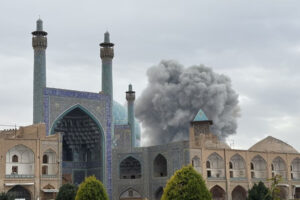
World cannot remain silent as US and Israel attack ‘heritage of humankind’: Iran
In a message posted on the social media platform X on Tuesday, Esmaeil Baghaei said the attack caused serious damage to the historic Chehel Sotoun