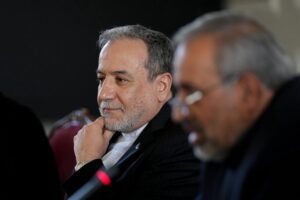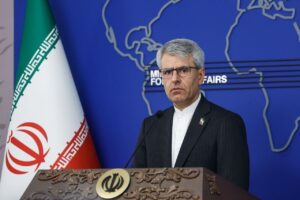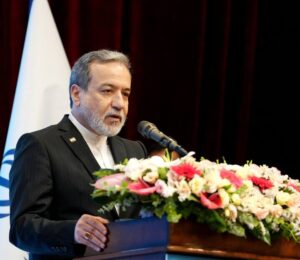
AVASH NEWS: “I am confident that this meeting, on the eve of the 25th anniversary of the Shanghai Cooperation Organization, will provide a valuable opportunity to deepen extra-regional cooperation, strengthen multilateralism, and chart new horizons for cooperation among member states,” he said.
Araghchi said:
Today, the Shanghai Cooperation Organization (SCO) stands at a critical juncture in the evolution of the international order. The world is facing unprecedented challenges, including the unchecked rise of unilateralism, the erosion of the fundamental principles of the UN Charter, the unlawful use of force, the imposition of unilateral and excessive sanctions, and the use of economic and financial mechanisms as tools of political pressure.
Under these circumstances, the responsibility of the Shanghai Cooperation Organization has become more important than ever. As one of the world’s leading regional organizations, bringing together a significant share of the global population, economy, energy resources, and strategic capabilities, the SCO can and should serve as a strong voice in support of multilateralism, respect for national sovereignty, the sovereign equality of states, and the rule of law in international relations.
Distinguished Colleagues,
In recent months, the Islamic Republic of Iran has once again been subjected to direct military aggression by the United States and the Israeli regime. Following the attacks of June 2025, the world once again witnessed renewed military attacks against Iran between February and April 2026. These actions targeted not only the security of the Iranian people but also the credibility of the entire international legal order.
On February 28, 2026, Iran experienced one of the darkest and most painful days in its history. On that day, the Leader of the Islamic Revolution, the highest political and religious authority of the Islamic Republic of Iran, was killed along with members of his family while at his office.
At the same time, a school in the city of Minab came under attack, and 168 students, school staff, and their family members were killed in what Araghchi described as a massacre.
The attacks did not end there. Later the same day, a sports stadium in the city of Lamerd, in Fars Province, was also targeted. According to technical evidence and remnants of the munitions used, the attack involved weapons whose use is inconsistent with the fundamental principles of international humanitarian law. He said such weapons were used against civilians for the first time, particularly young girls taking part in sporting activities. The girls, who aspired to achieve success in national and international competitions, were killed in the attack.
When attacks on educational and medical centers, critical infrastructure, economic facilities, and even peaceful nuclear facilities under the supervision of the International Atomic Energy Agency (IAEA) remain without an effective response from the international community, no country can be certain that it will not become the victim of such actions tomorrow.
Even more concerning is that these acts of aggression took place while the Islamic Republic of Iran had chosen the path of diplomacy and dialogue, and negotiations to resolve differences were underway. The response to diplomacy came not through negotiations, but through military attack. Such conduct undermines confidence in diplomacy, calls into question the credibility of peaceful dispute settlement mechanisms, and sends a dangerous message for the future of international relations.
After such crimes are committed, perhaps the most painful development is the attempt to normalize them. Contemporary experience has shown that when crimes are met with the silence, ambiguity, or indifference of the international community, they are not only allowed to continue but also become a pattern for repetition. Responsibility for such crimes does not rest solely with their direct perpetrators. Any political, military, or intelligence support for the aggressors, as well as silence or ambiguous positions in the face of such blatant violations of international law, will undermine the rule of law and encourage the perpetrators to repeat these unlawful acts.
What the Islamic Republic of Iran faced was not merely a threat to the national security of one country. It was a challenge to the fundamental principles on which the international legal order is built. Therefore, defending these principles is not simply a matter of defending the Islamic Republic of Iran; it is a matter of defending collective security, regional stability, and the credibility of international law. If the principle of the prohibition on the use of force is weakened and military aggression becomes a normal instrument in international relations, no country, regardless of its size, power, or geographical location, will be immune from its consequences.
The Islamic Republic of Iran exercised its inherent right to self-defense in accordance with Article 51 of the United Nations Charter and, within the framework of international law, defended its sovereignty, independence, and territorial integrity. At the same time, the Islamic Republic of Iran has once again demonstrated that it has never initiated, and will never initiate, a war. Our principled policy has always been based on dialogue, diplomacy, good-neighborliness, and regional cooperation. We continue to believe that lasting peace can only be achieved when aggression, occupation, threats, and double standards give way to mutual respect, the impartial implementation of international law, and genuine commitment to international obligations. Peace must be built, preserved, and sustained.
Although only a few weeks have passed since the signing of the Islamabad Memorandum aimed at ending the war, the United States has once again demonstrated its failure to honor its commitments. Its blatant violation of the provisions of the memorandum, including attacks on transport infrastructure, drinking water facilities, fishing boats, local commercial vessels, meteorological centers, and other civilian infrastructure, constitutes a clear violation of international law and international humanitarian law and is further evidence of its continued policy of resorting to the use of force and disregarding its international obligations.
At the same time, the United States’ direct intervention in the implementation of security and maritime arrangements in the Strait of Hormuz, along with the reimposition of a naval blockade, once again jeopardized the security of one of the world’s most strategic waterways and disrupted the normal flow of international commercial shipping. Recent months have clearly demonstrated that the security of the Persian Gulf and the Strait of Hormuz cannot be ensured through the presence and intervention of extra-regional forces, but rather through regional cooperation, mutual respect, and shared responsibility.
The Islamic Republic of Iran reiterates its firm determination to defend its sovereignty, independence, and territorial integrity. It further emphasizes that any participation in, cooperation with, or assistance in acts of aggression against Iran will entail international responsibility for the parties concerned. In accordance with international law, the Islamic Republic of Iran reserves its right to take all necessary measures in the exercise of its right to self-defense and will regard the source of any aggression against the Iranian nation as a legitimate target of the defensive actions of its armed forces.
Iran, with its unique geopolitical position, serves as a key link connecting Central Asia, South Asia, West Asia, and open seas. It stands ready to make its extensive capacities in transport corridors, energy security, regional trade, and economic cooperation available to the member states of the Shanghai Cooperation Organization.
The future of the Shanghai Cooperation Organization should be built on a comprehensive and multidimensional approach—one that gives equal attention to security, economic development, energy, regional connectivity, technology, and people-to-people cooperation. Strengthening transit routes, expanding regional corridors, increasing joint investment, facilitating trade among member states, and harnessing the vast energy resources and natural wealth of SCO members can transform the organization into one of the key drivers of growth and development in the 21st century.
To achieve this goal, we must strengthen our solidarity and cooperation to ensure that aggression does not replace diplomacy, force does not replace law, and double standards do not replace justice. A safer, more stable, and more just future can only be achieved if we speak with one voice in defense of the rule of law, the sovereign equality of states, respect for the independence of countries, and the dignity of nations. The Shanghai Cooperation Organization can and should stand at the forefront of this historic responsibility.