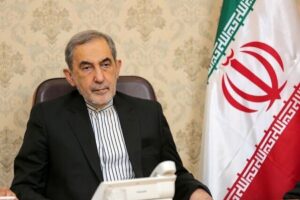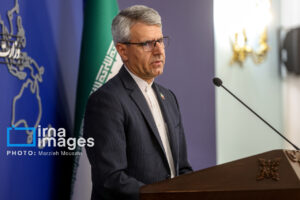
“Today, some media are in the hands of the Zionists and do not allow people to see the truth. But with available tools and cyberspace, public relations can deepen and broaden this influence and raise the level of awareness,” he said on Friday.
“This is the great responsibility that falls on the shoulders of public relations professionals,” the president told an audience of communications officials.
The president’s remarks come amid mounting evidence that Israeli authorities have imposed one of the strictest media crackdowns in the entity’s history, systematically concealing the full impact of Iran’s retaliatory strikes and Hezbollah’s precision attacks.
Filming impacts near security sites is banned. On March 11, when reports of a major coordinated Iranian-Hezbollah missile attack emerged, Israeli journalists who investigated found the information credible — but the military censor blocked publication.
Beyond censorship, Israeli authorities have restricted damage assessments.
New satellite imagery cited by Yedioth Ahronoth showed strikes on the Ramat David Air Base, Nevatim Air Base, the Mishar signals intelligence facility, and Camp Shimshon, where a fire spread across 200 meters after a Hezbollah drone strike.
The report noted that low-quality images were deliberately used, “casting further doubt on the regime’s transparency about the actual scale of damage sustained.”
President Pezeshkian, however, praised the effectiveness of Iran’s public relations apparatus, emphasizing its duty to expand influence beyond national borders.
“To the extent that public relations can expand its influence and scope of action, it has fulfilled its duty and mission well,” Pezeshkian said.
“If our public relations departments can extend their influence beyond geographical borders and expand information and awareness, an important development will occur,” he added.
As the US-Israeli war of aggression against the Islamic Republic continues, Iran has achieved a decisive victory in the information arena — a fact even Washington’s own classified assessments have been forced to acknowledge.
According to classified State Department documents published by Politico, the US has privately admitted that Iran is winning the battle in the media arena across the Muslim world, with Tehran’s narrative dominating public opinion in key nations including Bahrain, Azerbaijan, and Indonesia.
“Iran has won the battle in the media arena, garnering popular support in Muslim countries while simultaneously damaging America’s credibility and security relations,” the documents reportedly state.
In Bahrain, which hosts the US Fifth Fleet, pro-Iranian social media accounts have successfully spread the message that Washington has abandoned the kingdom and prioritized Israel’s security over its Persian Gulf allies.
In Indonesia, the world’s largest Muslim country, Iran’s greatest media achievement has unfolded, where Tehran launched a large-scale operation based on Islamic solidarity and anti-colonial sentiment.
The Iranian embassy’s social media posts now receive far more views, positive comments, and local media reposts than ever before.
Foreign Policy magazine, in a remarkably candid analysis, has acknowledged Tehran’s strategic superiority in the information domain.
The American publication recently admitted that in the eyes of Muslim nations — both Shia and Sunni — the Islamic Republic of Iran is the winner of the battlefield against the Western-Zionist front.
“For Iran’s admirers throughout the Islamic world, the resistance model continues to be attractive as the only way to confront hegemony,” Foreign Policy wrote.
The magazine emphasized that forcing the United States and Israel to stop aggression and accept a ceasefire has been recorded as a “definitive victory” for Iran in the eyes of the nations of the region.
“The fact that a country under the most severe sanctions can impose its will on the world’s major powers has strengthened Iran’s position as the leader of the front of resistance against the West,” it wrote.
Crucially, Foreign Policy noted that Iran’s influence has crossed religious borders, with the appeal of resistance increasing sharply among Sunni masses. Muslim nations see Iran as the only power that has actually resisted aggression.
As Radio Free Europe/Radio Liberty reported, the Iranians’ perception of victory has shaped the country’s conduct in the war, where it has refused to capitulate.