Avash News: Mehdi, the father of Sadra, remembers the last day he took his son to school. “He did not want to go by school bus, so I drove him to school. He warmly said goodbye to his mother before leaving home, and when we arrived at school, he hugged me and then went to his class.”
Mehdi said that at 9:00 a.m., they got the news of what had happened in Tehran, but they never thought they would also attack their province.
“And then my wife called me and said we should go to pick up our son,” Mehdi said, adding that it just took 10 minutes to arrive at the school, but they attacked the school before they could get there.
I saw scared kids with dusty faces
“I was among the first parents who had arrived. I saw a number of frightened kids with dirty faces whose class apparently had not been destroyed. We asked them what had happened, but they could not answer.”
“Nothing had remained of the school except for accumulated bricks. Approximately 90 percent of the school had been destroyed, as well as a number of cars that were in the school’s yard.”
Mehdi says you could see the body parts of the victims scattered everywhere. “On one side, you saw hands; on the other side, you saw legs, and also the head of a child. It was so horrible.”
Everyone came to remove rubble
Some were trying to move large stones so that maybe they could find even a person alive. The parents were not only worried about their own children. “That day, even people came to help with the rescue who did not have any children at the school.”
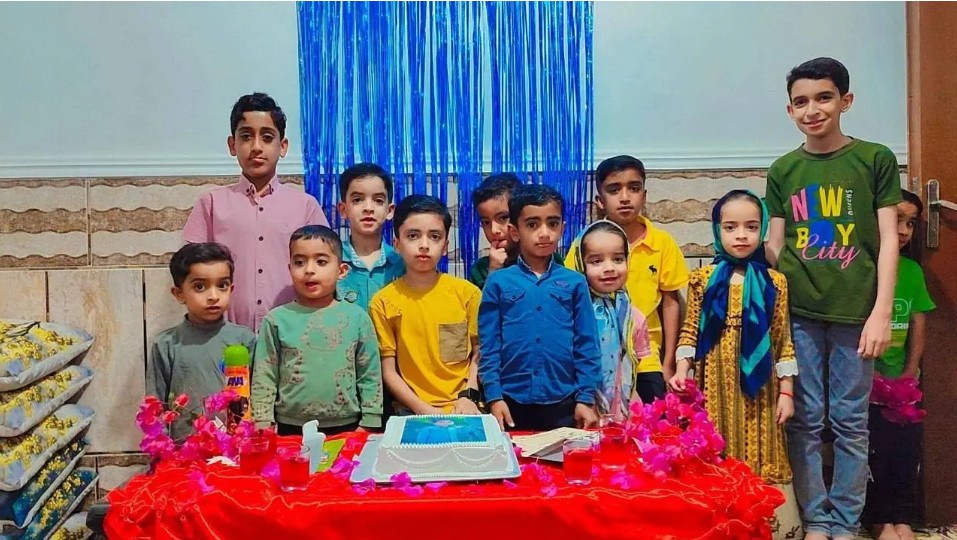
The missile attack on Shajareye Tayyebeh School in Minab, southern Hormozgan Province, was one of the most horrible incidents of the Israel-US war against Iran, during which more than 170 civilians were killed, most of them children between 7 and 12 years old.
Investigations have shown that the missile that hit the school was a Tomahawk fired directly at the school by the US.