Avash News: Repeated and organized attacks on major universities, including Shahid Beheshti University, Iran University of Science and Technology, and Isfahan University of Technology during March–April, indicate a systematic strategy aimed at paralyzing Iran’s scientific and research capabilities.
This report, prepared based on official statements issued by universities and field reports, examines various aspects of these crimes and analyzes their legal consequences in light of international commitments, in an effort to clarify how attacks on the domain of science amount to war crimes and state terrorism.
Shooting the beating heart of Velenjak
An examination of recent bitter events shows that the enemy has placed non-military and educational centers at the top of its target list, disregarding conventional military regulations and crossing established rules of engagement.
On April 5 at 16:00 local time, one of Shahid Beheshti University’s research and educational centers in Velenjak was directly attacked. The university’s management board issued a statement expressing strong condemnation and described this action as a continuation of hostility toward wisdom and freedom of thought.
These attacks have been carried out despite the fact that universities must enjoy full immunity under international conventions. Shahid Beheshti University emphasized in its statement that this aggressive act has not only threatened the security of the scientific environment but has also constituted a blatant assault on the determination of Iran’s academic community to continue its research mission. These scientific institutions have called on the media and the international community to reflect the realities of these attacks and to break the silence surrounding such anti-human actions.
The series of airstrikes on Isfahan’s industrial hub
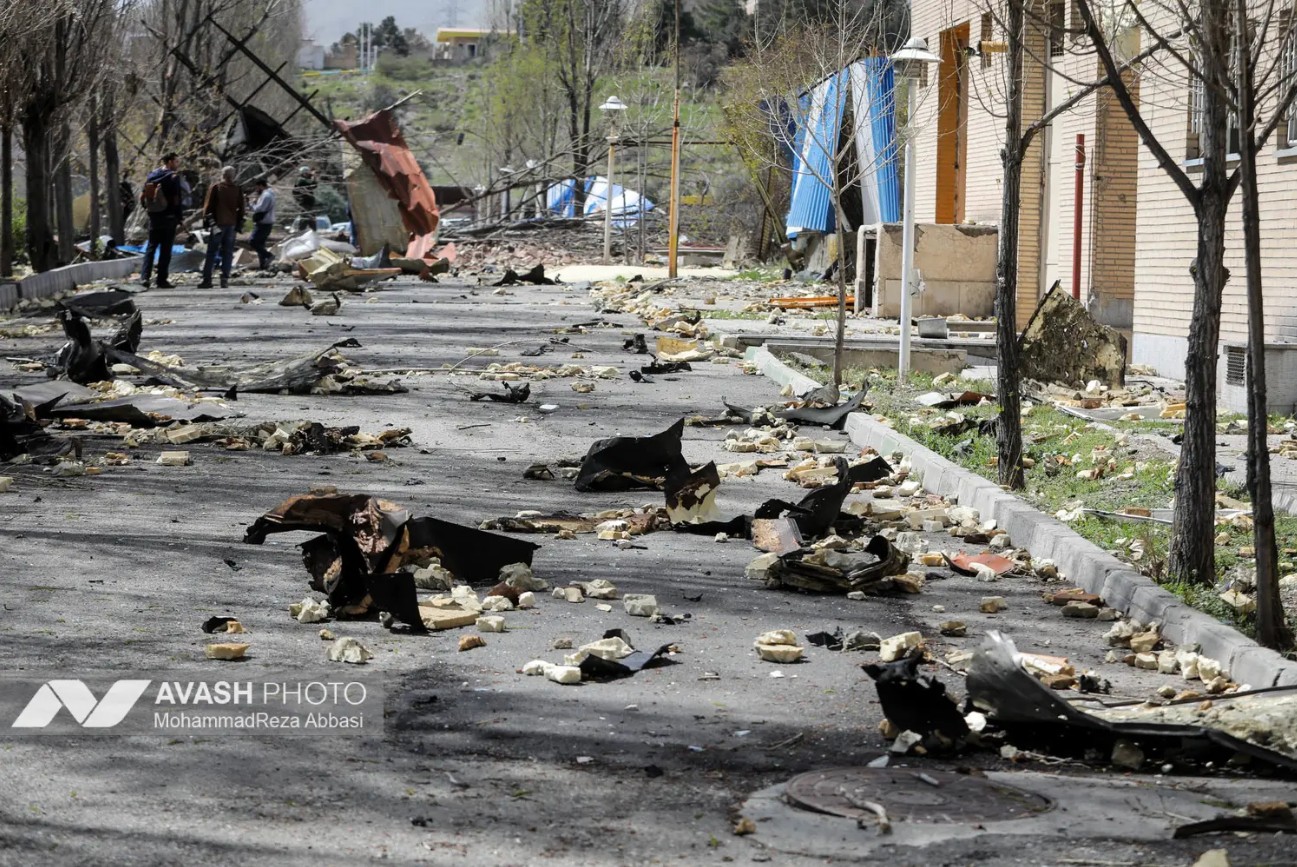
Prior to the attacks in Tehran, Isfahan University of Technology was also struck in violent and direct airstrikes on March 26 and 29. According to the university’s Public Relations Office, the second attack on March 29 directly targeted one of its research centers, leading to widespread destruction of buildings and injuries to several staff members. Investigations are still underway to assess the extent of the losses. This marked the second attack within less than a week in which enemies of the Iranian nation’s knowledge and progress targeted a major academic center in an attempt to disrupt scientific activities through fear and intimidation.
Disaster in science and industry, and martyrdom of elites
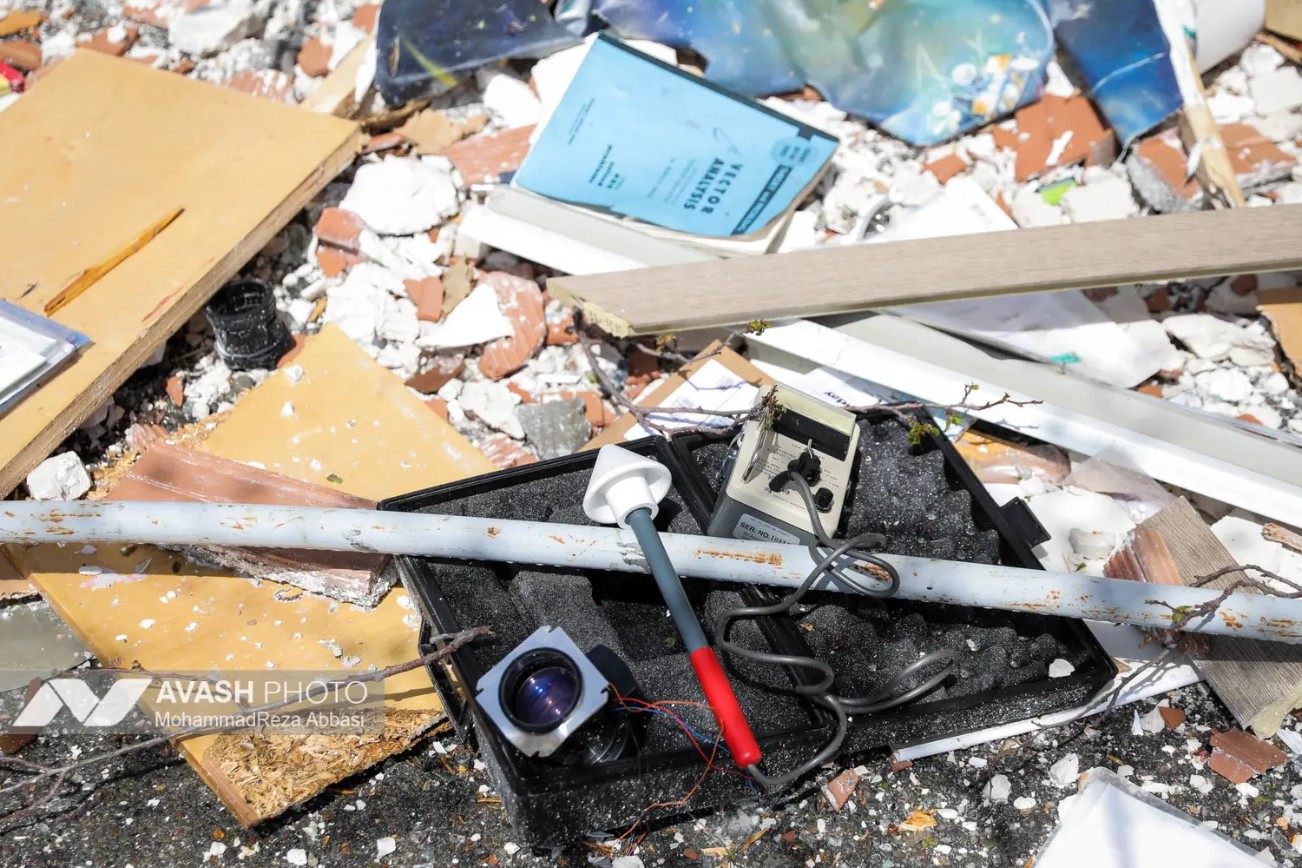
In addition to structural damage, the physical assassination of scientific elites formed part of this grim scenario. Videos released by Iran University of Science and Technology in the early hours of March 26 show massive fires and the destruction of sensitive laboratory equipment following missile strikes. Mehr News Agency reported that these attacks caused large-scale and irreparable damage, although at certain hours no direct fatalities were reported on the university campus.
Universities in the framework of the Geneva and Hague Conventions
From the perspective of international law, these actions constitute clear and explicit violations of several fundamental commitments, foremost among them the Principle of Distinction. According to Articles 48, 51, and 52 of the Protocol, parties involved in armed conflicts are obliged to distinguish between military and civilian targets. Universities, as educational institutions, are entitled to general protection, and attacks against them cannot be justified under any claim of military necessity.
Any deliberate attack on such centers, under the Rome Statute, is considered a flagrant example of a war crime, and those responsible, including commanders and agents, must be brought before the International Criminal Court. Furthermore, the 1954 Hague Convention on the protection of cultural and scientific assets emphasizes the immunity of educational centers as part of humanity’s cultural heritage.
Breaking the lethal silence of global legal institutions
In response to these crimes, Iran’s scientific diplomacy has become increasingly active. Scientific representatives of the Islamic Republic of Iran across the world—including Europe, China, Russia, and East Asia—have sent an open letter to more than 200 major universities, referring to Iran’s membership in international conventions and emphasizing the necessity of safeguarding the domain of science. They have called on scientific communities worldwide to break their silence in the face of the destruction of science and research.
The letter also highlighted the need to extend psychological and legal support to Iranian students studying abroad who remain concerned about the safety of their families and the security of scientific centers in their hometowns during these difficult days. UNESCO and international academic unions have been identified as key audiences for these appeals, aimed at defending the legitimate rights of researchers against acts of state terrorism.
Legal prosecution and the demand for compensation from aggressors
At the domestic legal level, significant steps have also been taken. Hassan Abdolian-Pour, head of the Center of Lawyers within Iran’s legal system, announced the deployment of legal and technical experts to Iran University of Science and Technology and other affected centers. Criticizing what he described as double standards within the global human rights system, he emphasized that legal prosecution and the preparation of grounds for condemning those responsible have been placed on the center’s agenda.
These efforts aim to prepare legal dossiers for submission to international courts in order to hold perpetrators accountable and secure substantial compensation for the destruction of laboratory infrastructure. Lawyers and experts who themselves graduated from these scientific centers have now assumed responsibility for defending the rights of the academic elite, acting as legal advocates to demonstrate that the sacred domain of science must not be violated under any military pretext.
Steadfastness in the path of science
Finally, it must be emphasized that although the violent attacks on Shahid Beheshti University and Iran University of Science and Technology have resulted in heavy human and material losses, they have also strengthened the determination of the scientific community to continue along the path of knowledge.
Knowledge and wisdom have deep civilizational roots in Iran that have endured from the Mongol invasions to modern missile attacks, standing resilient through history. Attacks on universities reflect the enemy’s recognition of failure in other arenas and its resort to assassination to compensate for its inability to compete scientifically.
The legal pursuit of this case toward a decisive outcome within the United Nations and other judicial bodies is both a national and international responsibility. Legal and media experts are tasked with revealing the true image of the enemies of science to the global public and increasing the cost of such crimes for those responsible.