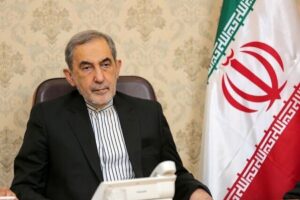
In his message, on the occasion of National Khayyam Commemoration Day, held on May 18 every year, Salehi noted that the legendary Iranian polymath pushed man to question, in order to ponder the meaning of life, and re-examine his relationship with the world.
Stating that the contemporary era is caught up, more than ever, in the hectic life and chaos of narratives, he said reciting Khayyam’s poems can guide people to think, reflect, and converse with oneself.
He underscored that Khayyam can be an inspiration for today’s society because of his legacy, in which science and literature, or reason and poetry, do not contradict, but rather complement each other.
While honoring the enduring figure of Iranian culture and thought, Salehi stressed the need to preserve the intellectual and cultural legacy of the great men like Khayyam, saying the poet did not belong only to Iran’s history and past, but he is part of the living cultural identity of Iranians.
Born in 1048, Khayyam – the Persian astronomer, mathematician, and poet — lived until 1131. He is well known for his Robaiyaat (quatrains), which were rendered into English by Edward FitzGerald, making his poems popular among different generations of readers.
Khayyam passed away in Neyshabur, a city in the present Razavi Khorasan province, where his mausoleum is a masterpiece of Islamic-Iranian architecture and an attraction for foreign and domestic tourists.