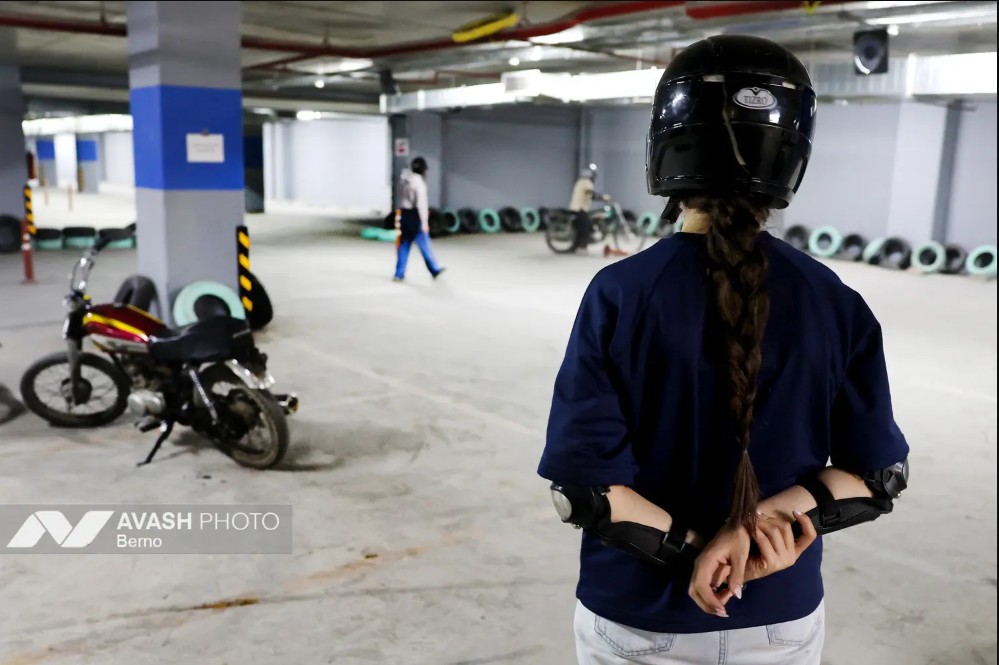
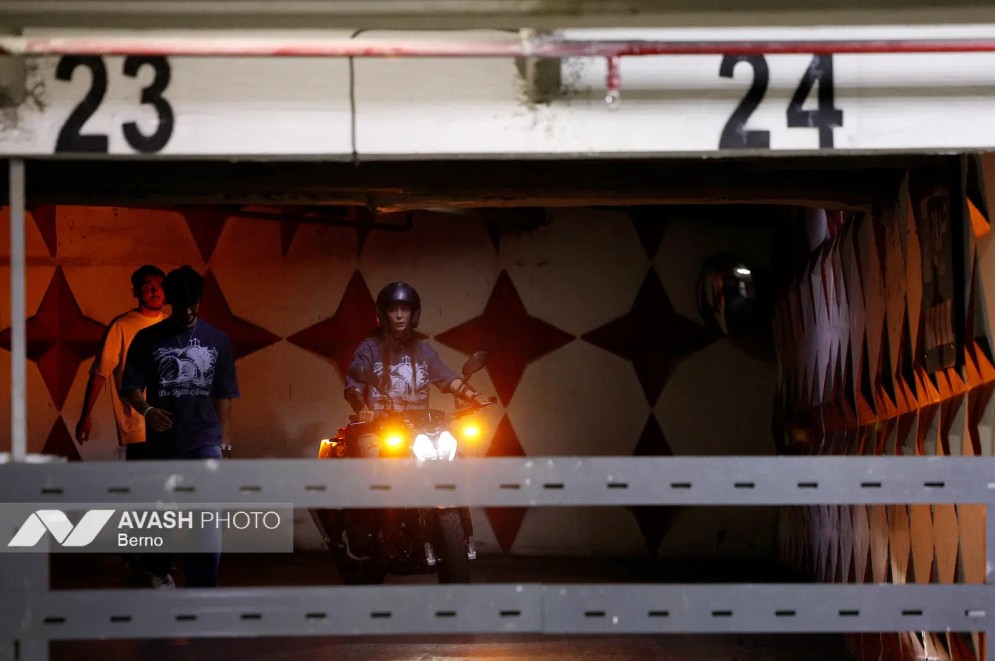
Avash News – The training sessions are held at a facility operating with a sports permit under Iran’s Automobile and Motorcycle Federation. The women wear helmets and protective equipment and practice basic skills such as balancing, accelerating, braking and turning.
But there is a major legal issue: although women can learn to ride motorcycles and some are already riding them on city streets, they have not been able to follow the same official process available to men for obtaining a motorcycle license.
For the women training here, the problem is not simply access to a motorcycle. It is the lack of a clear legal path from training to licensing.
Why do women need motorcycles?
The women at the training center do not all ride for recreation or excitement. For some, a motorcycle is primarily a means of transportation.
A nurse may need a faster and more affordable way to get to work. A teacher may want to reduce the time spent commuting across Tehran. A mother of two may be looking for a practical way to manage daily travel between home, work and family responsibilities.
In a city where commuting can consume several hours of each day, motorcycles can offer a relatively inexpensive and flexible means of transportation. The reasons these women give for wanting to ride are often the same reasons millions of Iranian men have used motorcycles for years.
This is also why the image of the “female motorcyclist” cannot simply be reduced to young women seeking adventure or breaking social taboos. For some women, the motorcycle is a practical tool for work and everyday life.
A 57-year-old beginner
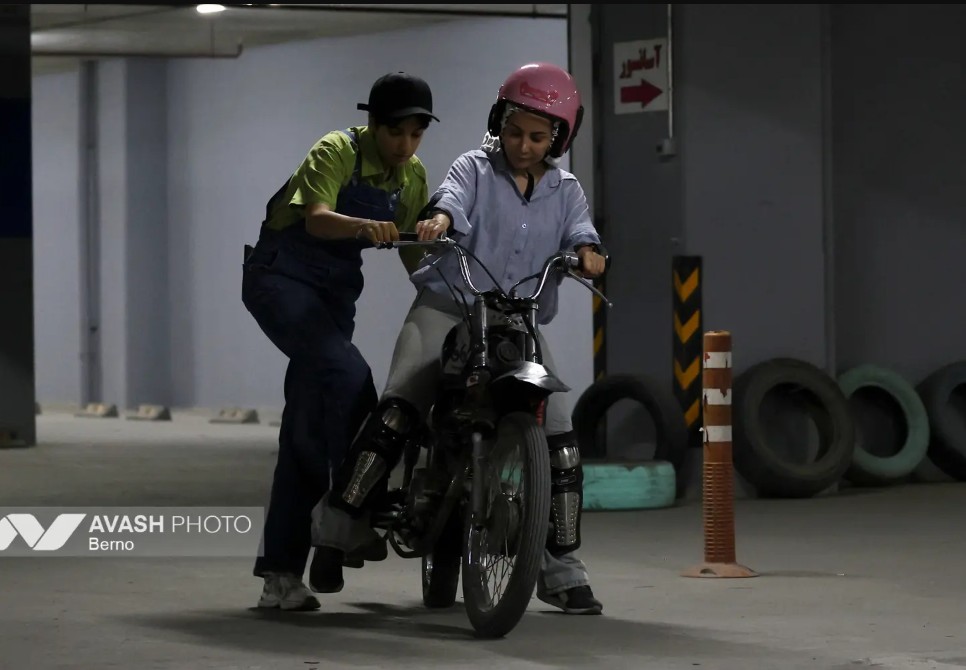
Among the trainees is Azar, 57, who has recently decided to learn how to ride.
She came to the training center with her daughter. For Azar, beginning motorcycle training at 57 is something she might not have imagined when she was younger.
When asked whether the lack of a motorcycle license could discourage her, she answers directly: “Even if they don’t give me a license, I will still ride.”
Her daughter supports her decision and says she is proud that her mother has challenged the long-standing taboo surrounding women and motorcycles.
Azar’s story also reflects a generational change. Women from older generations often had little opportunity or social acceptance to consider motorcycle riding as an ordinary skill. Younger women increasingly see it as something they can learn and use.
At the training center, a teenager can practice alongside a woman in her late 50s. Their ages are different, but they begin with the same basic lessons: balance, throttle control, braking and turning.
Learning is possible; licensing is the problem
The women training at the center are not simply getting on motorcycles and riding into traffic. They are receiving instruction, using safety equipment and practicing under supervision.
For men, this type of training can be followed by formal instruction, a test and the issuance of a motorcycle license. The legal process for women, however, has remained unresolved.
This creates a significant contradiction. Women can learn the practical skills required to operate a motorcycle, but they do not have the same established route to obtain a motorcycle license.
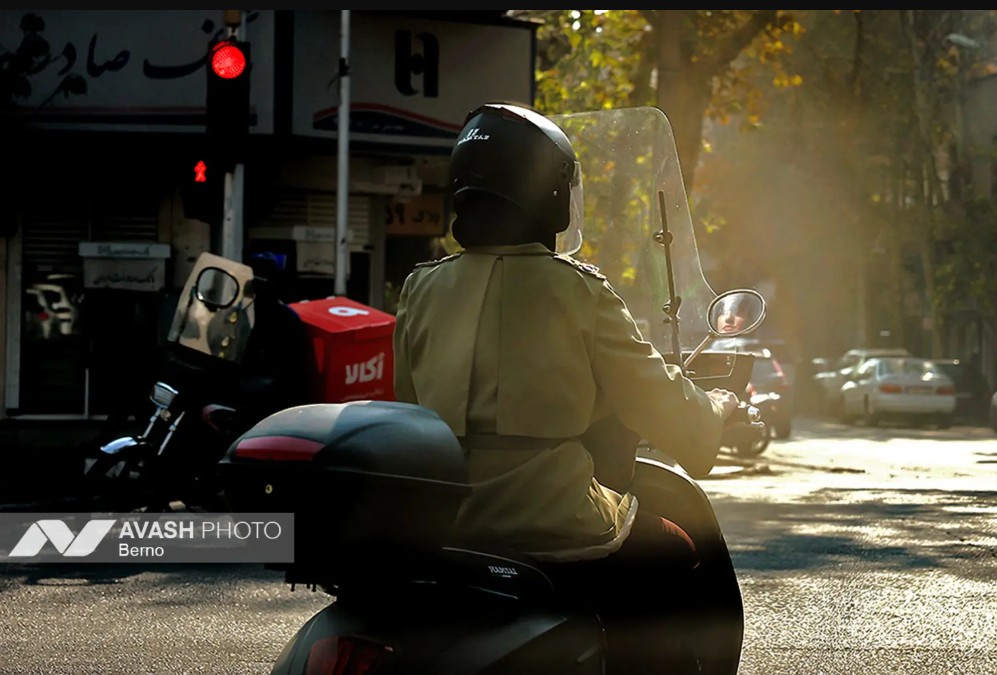
Some women have already purchased motorcycles, others are considering doing so, and some are already riding scooters or motorcycles on city streets for work or personal transportation.
As a result, the question is no longer simply whether women will ride motorcycles. Some already do. The question is whether their existing practice will eventually be incorporated into a formal system of training, testing, licensing and legal responsibility.
From motorcycle courier to mechanic
One of the women at the center has gone further than simply learning to ride.
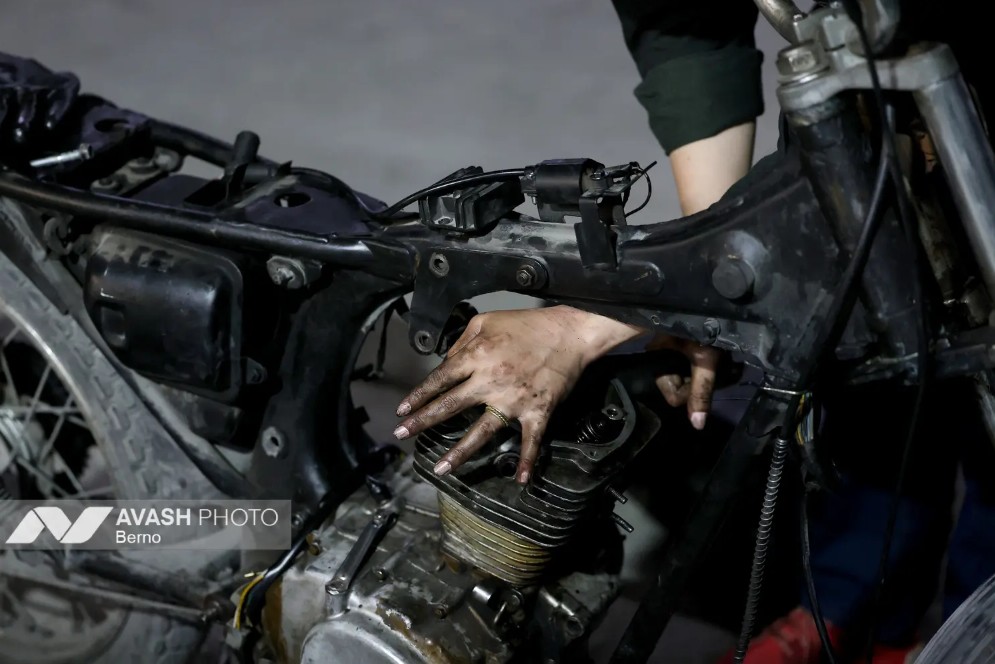
She is a university graduate who became interested in motorcycles after her brother bought her one. She eventually worked as a motorcycle courier and learned how motorcycles work mechanically. Today, she can dismantle and repair motorcycle parts and is comfortable working with tools.
Her goal is to eventually have her own garage and work as a vehicle mechanic.
Her experience challenges another common assumption about motorcycles and mechanical work in Iran: that these are predominantly male occupations.
Her story is not only about women riding motorcycles. It is also about women entering areas of work traditionally associated with men—from motorcycle delivery and repair to vehicle maintenance.
The practical consequences of not having a license
The absence of a clear licensing process is not merely a symbolic or social issue. It has practical consequences, particularly in the event of an accident.
Motorcycles are among the more vulnerable vehicles in urban traffic, making training, testing and insurance important parts of road safety.
According to Tehran traffic police statistics cited in the original report, 299 of 528 injury-causing crashes recorded during the first week of October 2025 involved motorcycles.
Insurance rules also make the issue more complicated. Under Iran’s compulsory third-party insurance law, an insurer may compensate an injured third party even when the driver responsible for an accident does not have a license. However, the insurer can subsequently seek reimbursement from the driver responsible for the accident.
The legal distinction between compensation for third parties and compensation for the unlicensed driver responsible for an accident can also affect the driver’s own rights.
This means that the motorcycle licensing issue is directly connected to road safety, insurance, financial liability and legal responsibility.
A changing reality on Tehran’s streets
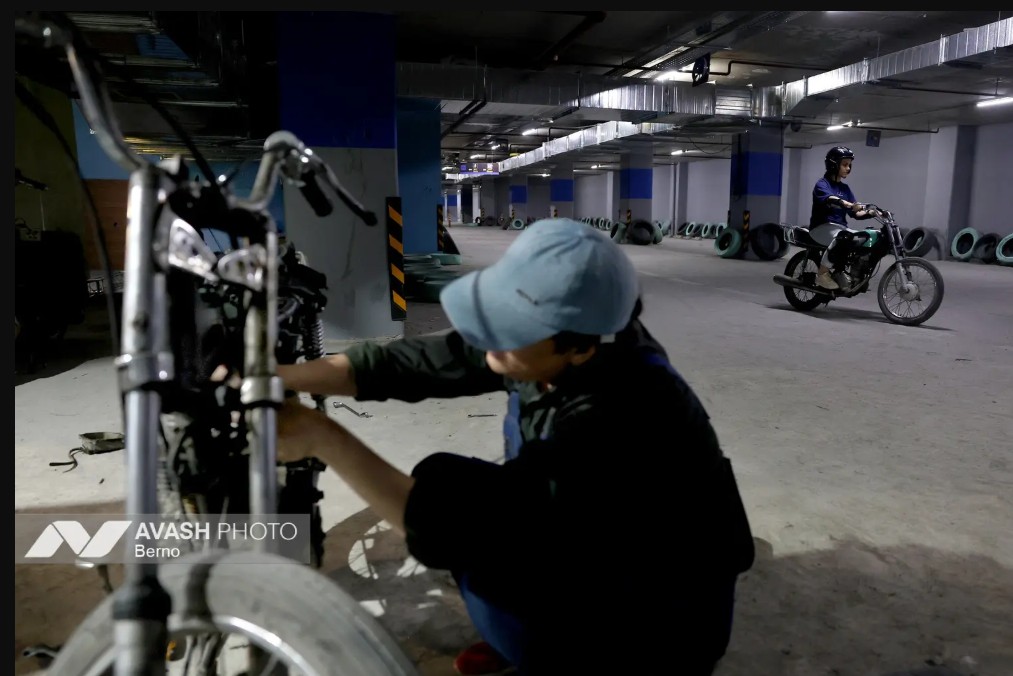
The women training underground represent different generations and different reasons for wanting to ride.
A 16-year-old is beginning to learn the basic skills. A 57-year-old is starting a new activity later in life. A nurse and a teacher see motorcycles as practical transportation. A mother of two wants to make daily travel easier. A former motorcycle courier is developing mechanical skills and hopes to run her own garage.
What they share is the desire to acquire a skill that men in Iran have long been able to learn, test and officially license.
The broader reality is already visible on Iranian streets. Women can be seen riding scooters and other motorcycles for transportation, work and personal purposes.
The legal question has therefore moved beyond whether women should or should not ride motorcycles. The issue is how an existing reality can be brought into a clear regulatory framework that provides access to formal training, testing, licensing, insurance and legal responsibility.
For the women practicing three floors below a shopping mall, learning to ride is already possible.
The unresolved part is what happens after the training ends.