Standing beneath the Acropolis, Marco Rubio gave the West a diagnosis and a cure. The diagnosis is weakness: a civilization ashamed of its own greatness, with its industry outsourced, its military withered, and its confidence gone. The cure is to revive the ancient Greek culture of strength, the thumos of pride, ambition, and contest, and to pursue national power “unapologetically.”
Part of this is fair. Nations that cannot defend themselves invite aggression. But the speech names the wrong disease. The crisis of our age is not too little strength. It is too much power without responsibility, power that answers to nothing beyond itself. The remedy is not more fire but the thing that has always governed fire: the ancient codes of honor.
His Greece is a world built on rivalry, excellence, and glory, where the great man surpasses others and civilizations “build upward.” Its heroes are Achilles and Leonidas, and its measure of a civilization is the strength of its will. Interests are defended “above all else,” and power depends on the credibility that it will be used.
Rubio does speak of “objective standards” and “a code that dictates how men ought to live.” He says his heroes serve “something larger than themselves.” Yet when that larger thing is defined as the nation pursuing its interests above all else, the self has merely been enlarged. Ambition remains ambition. Strength is a fact. It becomes a virtue only when something higher governs it.
Look at the world as it is. Wars of choice are launched while diplomacy is still being tried. The survival of whole nations is treated as one leader’s prerogative. Rules bind the weak and are waived by the strong. None of this is a failure of strength. It is what strength does when it answers to nothing.
Three questions test any power. For whom is it used? Within what limits? Answerable to whom? A power that cannot answer them has ceased to be authority and become appetite.
The Greeks understood this better than the speech admits. Thucydides records Athens telling the small island of Melos that the strong do what they can and the weak suffer what they must, and the chapters that follow record catastrophe. The Iliad opens with the wrath of Achilles and spends its whole length counting the cost. Greek history and tragedy feared unlimited power; they did not build their monuments to it.
Rubio condemned an Iran “whose cult of death hails child suicide bombers as national heroes, and portrays martyrdom as an end to itself” and declared that the West, by contrast, values life. The record answers him. A people who honor those who died resisting invasion are not worshipping death, and martyrdom in the tradition he caricatures was never an end in itself but the price of refusing to submit to tyranny. Meanwhile, the West that claims to value life shields its own killing from the standard it applies to others, condemning death when it is theirs and excusing it when it is ours.
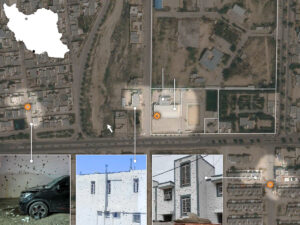
On the first day of the war on Iran, a girls’ school in Minab was destroyed, and 168 children were killed by US Tomahawk missiles. No apology has come. At the same time, American weapons and American political cover sustain Israel’s genocidal war in Gaza, a campaign already notorious for the number of children killed. Death is condemned when it is the enemy’s and excused when it is one’s own side’s. That asymmetry is the signature of power that answers to no common standard, and it is exactly what Rubio’s remedy would deepen.
A statesman who denounces a “cult of death” while remaining silent about, or actively enabling, the deaths of children under his own side’s power has already abandoned the moral distinction he claims to defend. The problem is not that the West has forgotten how to fight. It is that it has forgotten how to answer for the fighting it does.
Where Rubio calls for the ancient culture of strength, this essay calls for the ancient codes of honor that once governed strength.
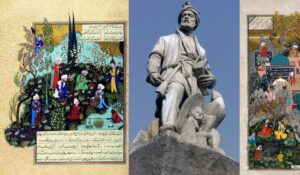
Every great civilization produced one. In Persia it was the pahlevan, the champion of the Shahnameh whose strength serves justice, who protects the weak, and who never draws his sword without cause. That ideal lives on in the culture of javanmardi and in the reverence for Imam Hussain among Shia Muslims, whose principled refusal of tyranny still speaks across religious and secular lines in Iran.
Within Islamic mysticism, the same ethic appears as futuwwa, spiritual chivalry, often exemplified by Imam Ali: selfless, courageous, incorruptible. The physical champion and the spiritual wayfarer are two faces of the same archetype.
The pattern is not Persian alone. In Europe it was the knight bound by his oath. In Japan it was the samurai under bushido. In Russia it was the bogatyr, who defends the helpless. In China it was the xia, who placed justice above a ruler’s command. In the Arab world it was muruwwa, the combination of generosity and protection.
The languages differ, the grammar is the same: strength is honorable only when it protects the weak, keeps its word, accepts limits it did not choose, and owns its deeds.
Honor does what treaties alone cannot. Law tries to restrain power from the outside, yet the most powerful have no one stronger to enforce it. Honor restrains from within. It operates even when no one is watching. It turns restraint into a source of pride rather than a mark of weakness, and it offers leaders a standard older than any government and independent of any alliance.
Reviving these codes does not mean romanticizing the past. It means recovering a shared moral vocabulary in which a leader’s greatness is measured by what he refuses to do rather than, as Rubio suggests, by the “unapologetic” pursuit of his own interests.
Iran has already lived a version of this ideal under extreme pressure. Decades of sanctions designed to humiliate a people, two wars launched by nuclear-armed powers, and direct strikes on its nuclear sites and leadership failed to break it. It did not collapse or surrender, and it abandoned neither the people of Gaza and Lebanon today nor the Black population of South Africa during the apartheid era. The task now is to claim it consciously, not as a badge of exclusive superiority, but as living proof that power can still answer to something higher than itself.
Rubio presents his virtues as distinctly Western and treats heroism and honor as the inheritance of one civilization. The historical record shows otherwise. The same ideal emerged repeatedly in many civilizations because each faced the same practical problem: how to restrain the strong from devouring the weak.
A West that rediscovers the ethic of the knight, a Persia that rediscovers the pahlevan, and a Russia that rediscovers the bogatyr would not be inventing a new language. They would be recovering a shared ancient understanding of how power should be used, one that can still set limits, hold leaders accountable, and judge every capital by the same standard.
Rubio says the builders of the Parthenon “built upward.” True. But the Parthenon has stood, in some form, for nearly twenty-five centuries because its builders bound height to proportion. Strength without measure does not build lasting monuments; it makes ruins, the very ruins with which his speech began.
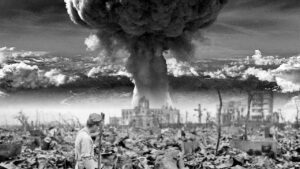
The West does not need to recover its fire; fire is already loose across the world, unrestrained, unaccountable, and leaving ruins in its wake. Rubio’s theory does not contain this force; it theorizes, legitimizes, and amplifies it. What remains to be recovered is not the will to wield power, but the honor and responsibility to govern it and channel it toward the common good.