Avash News – Global energy prices are rising. Economies are taking a direct hit. Billions of people across the world are either experiencing the pain or bracing for it.
Data released by the U.S. Labor Department on September 11 indicated that inflation in the United States is accelerating. The Consumer Price Index (CPI) rose 0.4% in August, compared with just 0.1% in July. On September 16, the Federal Reserve raised interest rates by a quarter of a percentage point for the first time in three years to contain inflation. Days earlier, the European Central Bank had hiked interest rates in an attempt to tame inflation in the euro area. The shortage of oil and gas and the hike in their prices are in turn driving up the use of coal across the world, according to the International Energy Agency, threatening to worsen climate change.
The driving force behind all this, the war on Iran, remains unresolved. But the status quo seems unlikely to remain as it is. As Iran’s own economy remains under pressure, Tehran and allied forces in the region seem determined to further turn the screws on the aggressor parties. The Iranian military closed the Strait of Hormuz shortly after the United States and Israel attacked the country. It has been closed since. Another major energy shipping route out of West Asia seems all but headed for closure by Ansarullah, Iran’s allies in Yemen, who advanced in and around the Bab al-Mandab Strait over the past week. And a major land alternative to those two routes, Saudi Arabia’s East-West pipeline, was shut down following strikes that caused damage to it, also on September 11.
It may be time to pause and think about whether and how countries may have gotten contemporary Iran wrong. A question that was asked of the Iranian Foreign Ministry spokesperson by a reporter on May 4 offers a window.
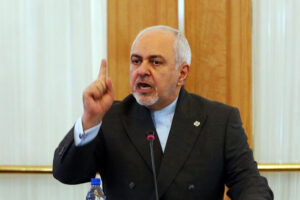
In the press briefing room on that day, the reporter, who had what sounded like an Arabic lilt to his Farsi, asked spokesperson Esmail Baqaei the following question: “The United States is a superpower. What tools do you have to fight it back? Why won’t you retreat, or back down?” While Baqaei has made his peace with the fact that dealing with such questions is part of the job, even he was visibly frustrated. “We are a superpower too,” he replied tersely.
The naiveté that lies at the core of the reporter’s question runs through the Western intellectual landscape writ large: the West’s superiority is a given, even when it is not actually superior on the ground. It is an either/or mentality, self-centered, dangerous in its reductionism. And it can plague greater minds too.
Henry A. Kissinger, former U.S. secretary of state and crusading upholder of the international order, famously said of the Iranian government in 2006 that it has to decide whether it wants to represent “a cause or a nation.”
It is hard to tell whether Kissinger’s fallacious proclamation was a genuine error or a clever way of philosophizing against an adversary. He could not have not known that all states can and do pursue a value — “a cause” — or a set of values and that Iran can’t be arbitrarily made an exception. It’s more likely that he didn’t want to concede a point against the Islamic Republic because this government’s values ran against those of America’s. In either case, he was being wrong, and others copying his argument have dared to insinuate that the Islamic Republic is not a state to begin with.
In fairness, Iran has been a sort of acnestis of the foreign media in the past decades. But it has never been a black hole. Information about the country is free. Those genuinely interested can do better than take constant counsel from the likes of FDD or UANI (Foundation for the Defense of Democracies and United Against a Nuclear Iran). Still, the danger is great. If Kissinger got it wrong, the pseudo-Iran experts are fair game.
Kissinger, of course, allowed his mind to operate on the either/or plane. He had the appearance of a theorist, but either failed to see the self-importance running through the West-above-everyone-else argument or hoped it would somehow remain invisible. And it did to many. Kissinger’s fallacy thus became the Kissinger Fallacy. There are people after all who remain deferential to “the international order” that the former U.S. secretary of state hoped to uphold, the one whose financial basis was designed in Bretton Woods in 1944. As with the reporter in the anecdote above, some of them aren’t even Westerners.
Regardless, Iran has long developed the organizational nerve (all states are organizations in essence) and expertise to carry out state policy incredibly sustainably. In the course of the ongoing war on Iran, some foreign observers have been calling precisely that quality by another name: survivability.
Survivability is really the ultimate form of nationhood. Only peoples who have a shared sense of history and destiny can and will survive the worst that is thrown their way over long periods of time, as the Iranian people have since the 1979 Revolution, which established the Islamic Republic and set off a great deal of foreign animosity. And, as far as a nation’s government is concerned, making decisions that facilitate that survivability is also the ultimate form of statehood.
The revolutionaries who took the helm post-1979 won the battle for power inside of Iran precisely because they had more social backing for the values they held. That social backing endures into the present, and the war may have actually strengthened it.
Kissinger deliberately or not failed to acknowledge that merely because the values cherished by the Islamic Republic may be in perpetual conflict with those of the West doesn’t mean it cannot be driven forward by those values as a state, and a powerful one at that. In the end, though, and as evidenced by Iran’s performance in the war, the rejectionist view would not have mattered.
*The views and opinions expressed in articles published in this section are those of the individual authors and do not necessarily reflect the official positions or views of AVASH.